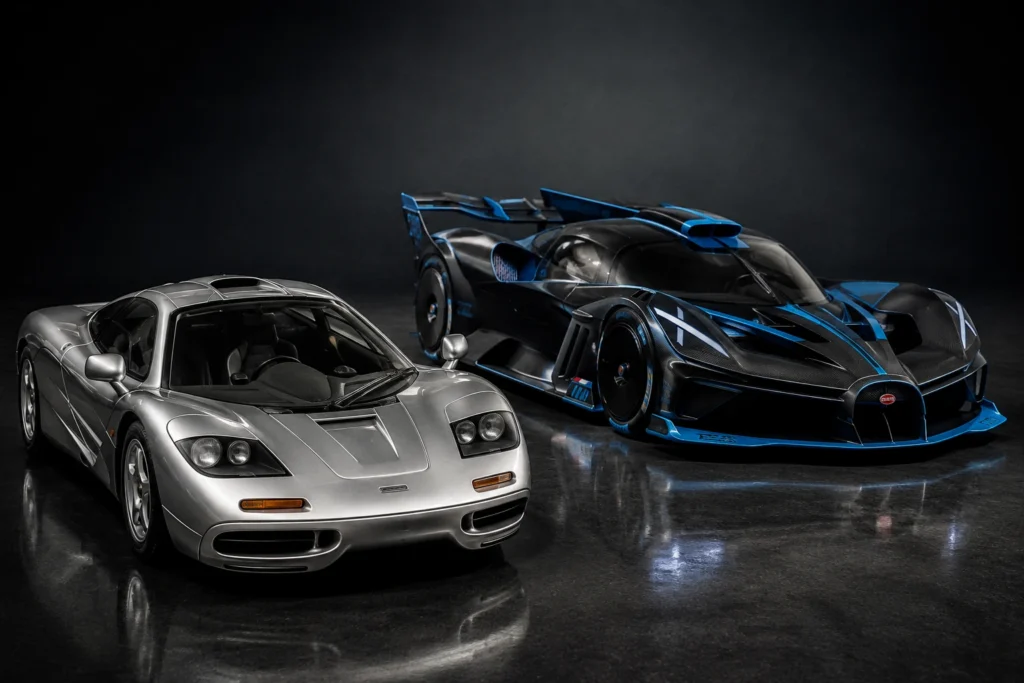
Die-Cast Scale Model : There is a special kind of satisfaction in opening a small box, removing the protective packaging, and holding a beautifully detailed 1:18 scale model car for the first time.
You cannot drive it. You cannot hear its engine. You cannot feel the acceleration. Yet, somehow, a great die-cast model can still capture the excitement of a real performance car.
For me, that is the magic of collecting scale models.
My collection is not simply a shelf full of miniature cars. It represents different eras of automotive design, engineering, and performance. From the legendary McLaren F1 to the extreme Bugatti Bolide, every model has a story behind it.
And honestly, once you start collecting, it can be surprisingly difficult to stop.

Where My Die-Cast Obsession Started
Like many car enthusiasts, my interest in miniature cars started with ordinary toy cars.
As a kid, those cars were made for racing across the floor, jumping over obstacles, and surviving crashes. However, something changed as my interest in cars grew. I started paying more attention to the actual design of the vehicles.
Then came the first properly detailed scale model.
That experience changed everything.
Suddenly, tiny details became important. The tread pattern on the tires, the shape of the headlights, the badges, the wheels, the interior, and even small suspension components could make a model feel surprisingly realistic.
At that point, these cars stopped feeling like simple toys. They became miniature versions of machines I already admired.
That is when collecting became more interesting than playing.
Why 1:18 Scale Models Are So Special
There are many different scales available to collectors, but 1:18 remains one of the most popular choices for detailed display models.
The reason is simple: the size gives manufacturers enough room to reproduce a large number of exterior and interior details.
Depending on the manufacturer and model, a 1:18 scale car can feature opening doors, detailed engine bays, steering wheels, realistic seats, brake components, suspension details, and accurate bodywork.
Of course, not every 1:18 model has the same level of detail. Quality depends heavily on the manufacturer, price, materials, and specific model.
Still, when you place a well-made 1:18 model on a shelf, it can look remarkably close to a real car in miniature form.
The McLaren F1: An Automotive Masterpiece
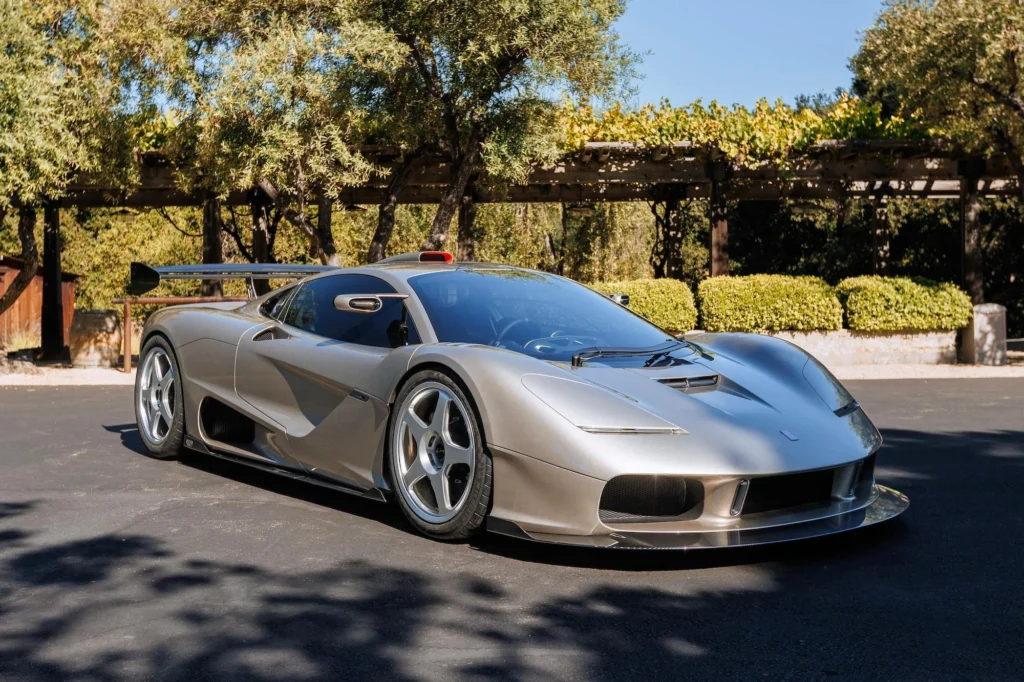
One model that deserves a special place in any serious performance-car collection is the McLaren F1.
Designed by Gordon Murray, the McLaren F1 became one of the most influential supercars of the 1990s. Its lightweight construction, naturally aspirated BMW V12 engine, manual transmission, and three-seat configuration made it fundamentally different from most other performance cars of its era.
The central driving position is perhaps its most famous feature.
Why the McLaren F1 Model Stands Out
A good 1:18 scale McLaren F1 model allows you to appreciate details that can be difficult to notice in photographs.
The three-seat interior immediately catches your attention. The driver sits in the center, while the passenger seats are positioned slightly behind on either side.
Then there is the exterior design.
The F1 does not rely on oversized wings or aggressive styling to look fast. Its shape is relatively clean, yet every line has a purpose.
For a collector, that combination makes the model fascinating to study.
The real McLaren F1 is also historically significant because it represents an era when lightweight construction, mechanical simplicity, and naturally aspirated performance were still central to the supercar formula.
also see
- Google Pixel 11 Series: Specs, Features, Price and Everything You Need to Know
- OnePlus 15 Cheat Sheet: Features, Price, Camera and OxygenOS
- July 2026 Sedan Sales: Maruti Dzire Leads as Virtus and Slavia Battle for Mid-Size Sedan Buyers
- Android 17 QPR2 Beta: New Features, Security Fixes and Supported Pixel Phones
The Bugatti Bolide: A Completely Different Philosophy
If the McLaren F1 represents elegant performance, the Bugatti Bolide represents extreme engineering.
The Bolide was developed as a track-focused Bugatti rather than a conventional road-going luxury hypercar. Its design is dominated by aerodynamic elements, dramatic bodywork, a huge rear wing, and an unmistakable track-car appearance.
It looks almost unreal.
That is exactly what makes a scale model of the Bolide so interesting.
Why the Bugatti Bolide Model Is Different
The Bolide has an enormous amount of visual complexity.
Its aerodynamic surfaces, sharp body lines, exposed-looking elements, distinctive lighting design, large wheels, and aggressive proportions create a very different visual experience from the McLaren F1.
A high-quality scale model can reproduce many of these details surprisingly well.
When finished with realistic carbon-fiber textures and carefully reproduced aerodynamic components, even a stationary model can look incredibly aggressive.
The Bolide therefore represents another side of automotive engineering: maximum performance and aerodynamic efficiency rather than traditional supercar elegance.
McLaren F1 vs Bugatti Bolide: Two Different Automotive Eras
Putting these two models next to each other makes the evolution of performance cars easy to appreciate.
The McLaren F1 belongs to an era focused heavily on lightweight construction, mechanical connection, and a naturally aspirated engine.
The Bugatti Bolide, meanwhile, represents a much more modern approach, where aerodynamics, advanced materials, extreme power, and track-focused engineering play a major role.
They are completely different cars, yet both are fascinating for the same reason.
They show what engineers can achieve when they are given the freedom to push performance in different directions.
That contrast is one of the biggest reasons I enjoy having both models in the same collection.
Why Do People Collect Die-Cast Cars?
The question I hear most often is simple:
Why spend money on a car that you cannot drive?
For someone who is not a collector, that question makes perfect sense.
However, collecting is not really about transportation. It is about appreciation.
1. You Can Own a Piece of the Dream
Very few people will ever have the opportunity to own a real McLaren F1 or Bugatti Bolide.
Their rarity, history, performance, and value place them far outside the reach of most enthusiasts.
A scale model obviously cannot replace the real car. However, it gives you a way to appreciate the design and engineering without needing a million-dollar garage.
That is part of the appeal.
2. It Can Be Surprisingly Relaxing
There is also something relaxing about working with a collection.
After spending hours looking at a computer or dealing with everyday responsibilities, cleaning a display case, organizing models, or simply looking at the details can be a pleasant break.
It is a small hobby, but it can provide a genuine sense of satisfaction.
3. Every Model Can Have a Story
A collection becomes more meaningful when the cars have personal stories attached to them.
One model might remind you of a childhood poster. Another might be connected to a racing game you played for years.
Some models may even represent a particular period in your life.
That emotional connection is something a simple list of expensive cars cannot capture.

How to Start a Die-Cast Collection
If you are thinking about starting your own collection, it is easy to get carried away.
There are thousands of models available, and new releases appear regularly. Therefore, having a basic strategy can save you money and shelf space.
Choose Your Scale
First, decide which scale suits you.
1:18 scale is a great option if you want larger models with plenty of visible detail.
1:43 scale offers a useful balance between size and display space.
1:64 scale is ideal if you want a larger collection without needing a huge display cabinet.
The most important thing is consistency. If you want your collection to look organized, choosing a primary scale can make a big difference.
Focus on Quality
It is tempting to buy several inexpensive models instead of saving for one premium model.
However, a high-quality model can often become the centerpiece of a collection.
Brands such as AUTOart, MINICHAMPS, and GT Spirit are well known among collectors, although the quality and specifications can vary from one model to another.
Before buying, check detailed photographs, reviews, construction quality, and the features offered by that specific model.
Protect Your Collection From Dust
Dust is one of the biggest problems for scale-model collectors.
A glass display cabinet is one of the best ways to protect models while keeping them visible.
If you do not have a display cabinet, a soft detailing brush or camera-lens blower can help remove dust from difficult areas.
Avoid using rough cloths or aggressive cleaning methods because small parts and delicate finishes can be damaged easily.
The Real Cost of Collecting
Another important lesson is to set a budget.
Die-cast collecting can become expensive very quickly, especially when you start looking at limited editions and premium models.
Instead of buying every model that catches your attention, create a wishlist.
Ask yourself a few questions before purchasing:
- Do I genuinely like this car?
- Does it have a place in my collection?
- Is the model worth its price?
- Do I already own something similar?
- Will I still want it a few months from now?
Waiting before buying can prevent impulse purchases and make the collection more meaningful.
What Makes a Great Scale Model?
Price alone does not determine whether a model is good.
Collectors should look at several factors, including body accuracy, paint quality, panel gaps, wheel design, interior details, proportions, materials, and overall finishing.
Opening parts can also be appealing, but they are not always necessary.
Sometimes, a sealed model with excellent proportions and beautiful exterior detailing can look better on a shelf than a model with many moving parts but weaker execution.
In the end, the best model is the one that makes you want to look at it again.
Final Thoughts
My die-cast collection is about much more than miniature cars.
The McLaren F1 represents an extraordinary chapter in automotive history. The Bugatti Bolide represents a completely different approach to performance and aerodynamics.
Putting them together on the same shelf creates a small timeline of automotive engineering.
That is what makes collecting so addictive.
You are not simply buying another model. You are choosing another piece of automotive history to keep.
And perhaps that is the real reason the obsession never completely goes away.
There is always another car to discover, another model to research, and another empty space on the shelf waiting to be filled.
So, what is the dream car you would love to have in your collection? Let me know in the comments.
Also See This
iPhone 18 Pro Production in India: Apple Expands Manufacturing for Global Markets
Ducati Monster Launched in India: New 890cc V2 Engine, Price, Features & Specs
Skoda Slavia Facelift Launching on August 18: What’s New?