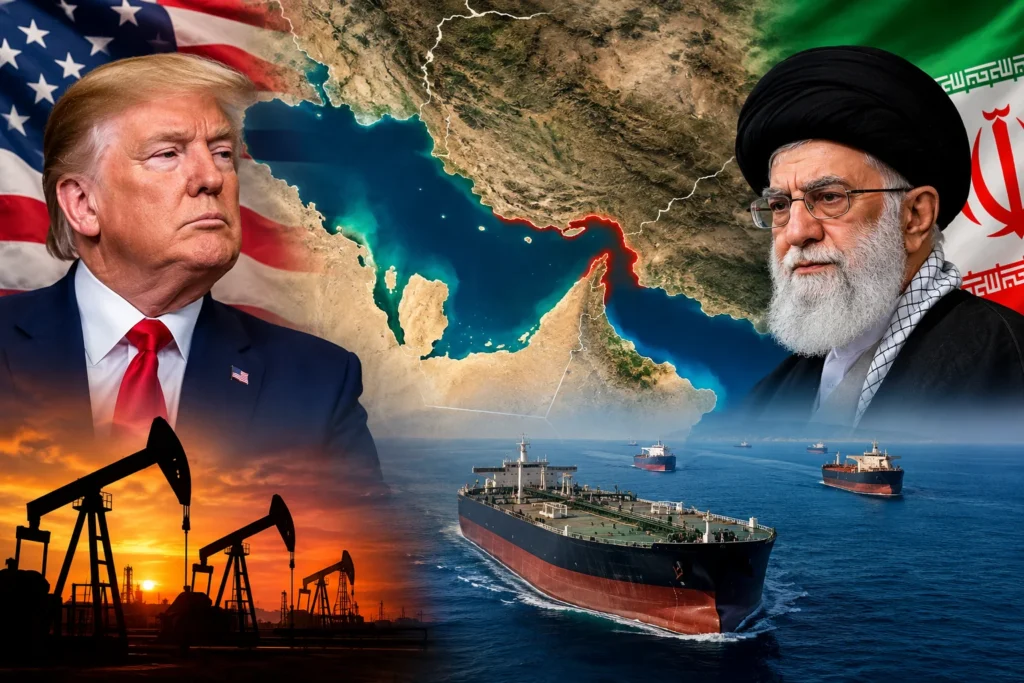
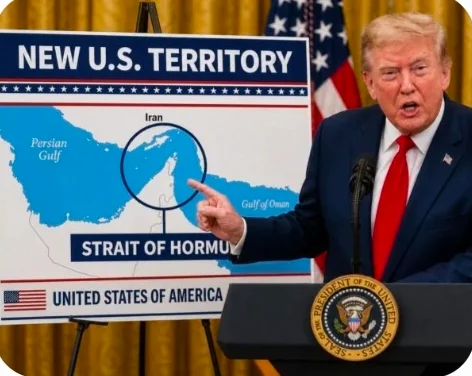
Global politics has entered another tense phase after US President Donald Trump shared a controversial map on Truth Social. The image labeled the Strait of Hormuz as “Trump Strait.” Soon after, reports said the US rejected Iran’s proposed seven-day diplomatic framework. That combination pushed the issue into global headlines.
The map itself has no official legal status. However, it became a powerful political symbol. It also revived concerns about military conflict, oil prices, and global trade.
The Strait of Hormuz carries a large share of the world’s oil shipments. Any disruption there can affect countries far beyond the Middle East. That is why governments, energy companies, and investors continue to watch every development closely.
Why Trump Strait Is Making Headlines
The debate started after Iranian officials said they had offered a seven-day plan through Qatari mediators. According to Iran, the proposal could reopen normal shipping if both sides accepted several conditions.
Instead of accepting the proposal, President Trump dismissed it publicly. He later shared a digital map that renamed the Strait of Hormuz as “Trump Strait.”
The image quickly spread across social media. Major international news outlets also reported on it. Supporters viewed it as a strong political message. Critics argued that it increased tensions during an already sensitive moment.
One important fact remains clear. No international organization recognizes the name “Trump Strait.” Official maps still use the internationally accepted name, Strait of Hormuz.
What Iran Offered in the Seven-Day Proposal
Iranian Foreign Minister Abbas Araghchi said Tehran sent the proposal through Qatari mediators during diplomatic discussions.
According to Iranian officials, the plan included several key points.
- The US would remove its naval blockade on Iranian ports.
- Washington would ease restrictions on Iranian oil exports.
- Frozen Iranian financial assets would become available.
- Both sides would pause military actions for seven days.
- Commercial shipping through Hormuz would return gradually.
Iran described the proposal as a practical first step toward reducing regional tensions. Tehran argued that confidence-building measures could create space for future negotiations.
However, US officials did not accept those conditions.
Why Trump Rejected the Offer
President Trump made his position clear during public remarks. He said he did not trust Iran to follow long-term commitments.
He also repeated a message he has delivered several times before. According to Trump, Iran will never be allowed to develop a nuclear weapon.
That statement reflects Washington’s broader security policy toward Tehran. US officials continue to argue that pressure remains necessary until Iran changes its approach.
The rejection also showed how far apart both sides remain. Diplomatic channels still exist, but neither government appears ready to make major concessions.
What Makes the Strait of Hormuz So Important?
The Strait of Hormuz is one of the most valuable waterways in the world.
The narrow passage sits between Iran and Oman. It connects the Persian Gulf with the Gulf of Oman and the Arabian Sea.
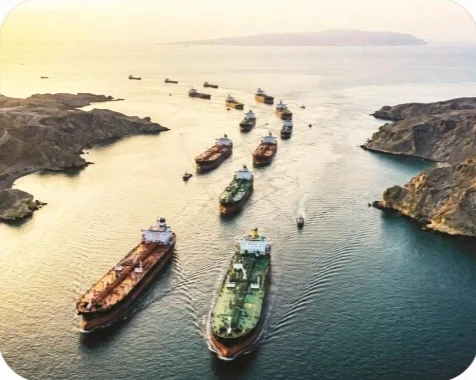
Every day, massive oil tankers travel through this route. Many LNG carriers also depend on the same passage.
Before recent disruptions, nearly one-fifth of globally traded oil moved through Hormuz. That number alone explains why every military incident attracts worldwide attention.
Why the Strait Matters
- It connects Gulf oil producers with global markets.
- LNG exports rely heavily on this route.
- Asian economies receive major energy supplies through Hormuz.
- Europe also depends on shipments from Gulf producers.
- Insurance costs rise whenever security risks increase.
The waterway remains narrow in several areas. That makes shipping operations more sensitive during military tensions.
How Energy Markets Could React
Energy markets respond quickly whenever Hormuz enters the news.
Traders monitor military activity almost in real time. Even rumors can influence oil prices for a short period.
If shipping slows down, transportation costs increase. Higher insurance premiums also make deliveries more expensive.
Those extra costs often reach ordinary consumers.
People may notice higher fuel prices at petrol stations. Airlines may face higher operating costs. Transportation companies may also raise prices.
Although markets sometimes recover quickly, uncertainty itself creates volatility.
The Nuclear Issue Still Drives the Conflict
The current dispute involves more than shipping.
The nuclear issue remains the biggest disagreement between Washington and Tehran.
Iran says sanctions should ease before major concessions happen. The United States wants stronger guarantees about Iran’s nuclear activities first.
That difference continues to block meaningful progress.
Several regional partners still encourage indirect talks. Qatar has played an important mediation role. Oman has also supported diplomatic communication in earlier negotiations.
Despite those efforts, both sides remain cautious.
Why the Truth Social Map Created Debate
Trump’s Truth Social post became controversial because maps often carry political meaning.
Changing a place name can signal power, influence, or political messaging. However, international place names usually require broad recognition before becoming official.
The United Nations has not adopted the label.
International maritime organizations also continue using Strait of Hormuz.
As a result, experts describe the map as a symbolic political statement rather than an official geographical change.
That distinction matters because global shipping depends on internationally recognized navigation systems.
How the World Is Responding
Governments across the world continue watching the situation carefully.
Many countries want stability because their economies depend on secure shipping routes.
Energy-importing nations worry about fuel prices. Shipping companies focus on vessel safety. Financial markets also react whenever tensions increase.
Diplomatic partners continue encouraging communication.
Several governments believe negotiations remain the safest path forward. Others emphasize military readiness while supporting continued dialogue.
For now, no major international body has endorsed the “Trump Strait” label.
Could Military Tensions Increase?
Security analysts continue monitoring military activity around the Gulf.
Both countries maintain strong positions.
The United States has significant naval capabilities in the region. Iran also views the strait as one of its most important strategic assets.
That combination creates a delicate balance.
Small incidents could attract international attention very quickly. Therefore, many experts continue calling for diplomatic communication even when political disagreements remain sharp.
What This Means for the Global Economy
The consequences extend beyond politics.
Oil prices influence transportation, manufacturing, and inflation.
If disruptions continue, businesses could face higher operating costs.
Consumers may also feel pressure through higher fuel bills and increased prices for imported goods.
Financial markets usually dislike uncertainty.
Investors often watch Middle East developments because energy supplies affect many industries worldwide.
Even if shipping continues normally, political uncertainty alone can influence market sentiment.
The Road Ahead
The immediate diplomatic breakthrough appears unlikely after the reported rejection of Iran’s seven-day proposal.
However, communication channels have not disappeared completely.
Regional mediators continue encouraging discussions.
Future negotiations may still happen if both sides find common ground.
For now, the internationally recognized name remains the Strait of Hormuz. The “Trump Strait” label exists only as a political message shared on social media.
The coming weeks will likely determine whether diplomacy regains momentum or whether both governments continue following a harder path.
One thing remains certain. The Strait of Hormuz will continue shaping global energy markets, regional security, and international diplomacy for years to come.
Frequently Asked Questions (FAQ)
Is Trump Strait an official name?
No. International organizations still recognize the waterway as the Strait of Hormuz.
Why is the Strait of Hormuz important?
Nearly one-fifth of globally traded oil passes through this strategic route.
Why did Trump reject Iran’s proposal?
Trump said he did not trust Iran to honor long-term commitments and repeated his opposition to an Iranian nuclear weapon.
Can this affect oil prices?
Yes. Tensions around Hormuz often create uncertainty in energy markets and can influence global fuel prices.
Also Read This
- Breguet Marine 5517 and Marine Chronograph 5527: Everything New in the 2026 Update
- OnePlus Security Flaw Could Give Apps Root Access: What OnePlus and OPPO Users Need to Know
- Microsoft 13-Inch Surface Laptop Launches With 25% Brighter Display and Up to 23 Hours Battery Life
- OnePlus N6 Lite vs iQOO Z11 Lite 5G: Which Is the Best Phone Under ₹20,000?
- Amazon Pay India FY26 Financials: Revenue Grows 18% While Losses Climb to Rs 1,149 Crore