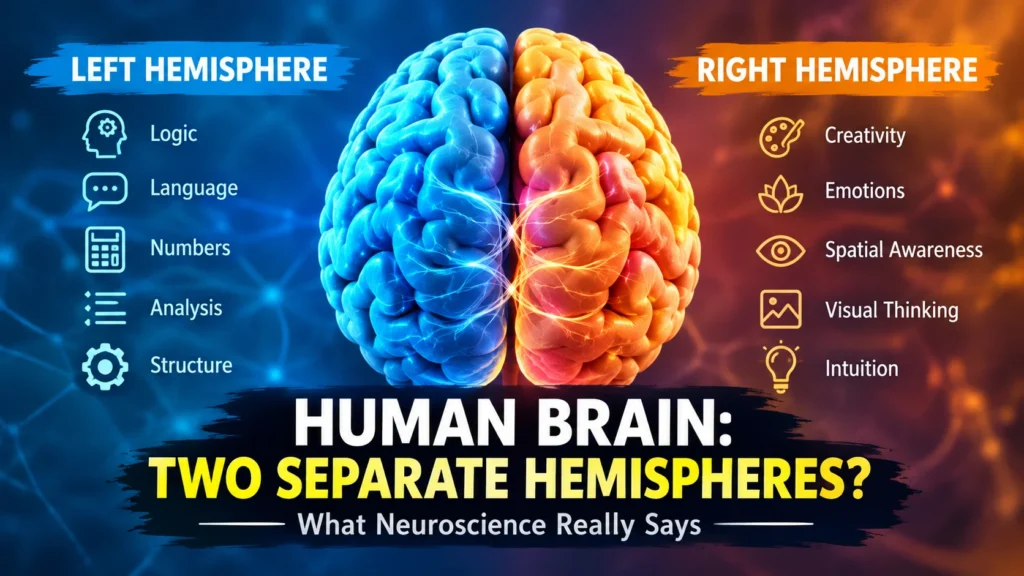
Human Brain: Imagine discovering that your brain is not really one perfectly unified system, but two highly specialized halves working together inside the same skull.
It sounds like something from a science-fiction movie. Yet decades of neuroscience research have shown that the left and right sides of the human brain can process information in different ways. In some unusual cases, especially after the connection between the two hemispheres is surgically severed, those differences can become surprisingly visible.
This has led to a fascinating question: Is the human brain actually two separate systems?
The short answer is no. The brain is biologically one organ. However, its two cerebral hemispheres have distinct specializations and can sometimes operate with a surprising degree of independence.
That distinction is important. It also helps explain why the popular idea of a “left brain versus right brain” is both fascinating and often misunderstood.
National Institute of Neurological Disorders and Stroke
What Does the Research Actually Show?
The human brain has two major cerebral hemispheres: the left hemisphere and the right hemisphere.
They are connected by a large bundle of nerve fibers called the corpus callosum. This structure allows information to travel between the two sides and helps the brain coordinate perception, movement, language, memory, and many other functions.
For most people, the two hemispheres communicate continuously.
However, researchers have studied people with damage to the corpus callosum and people who underwent a surgical procedure known as a corpus callosotomy. In some cases, this procedure was used to reduce severe epileptic seizures.
These patients became particularly important to neuroscience because they allowed researchers to study what happens when communication between the two hemispheres is greatly reduced.
The results were remarkable.
Some experiments showed that information presented to one hemisphere could sometimes be processed without the other hemisphere having normal access to it.
This research became known as split-brain research.
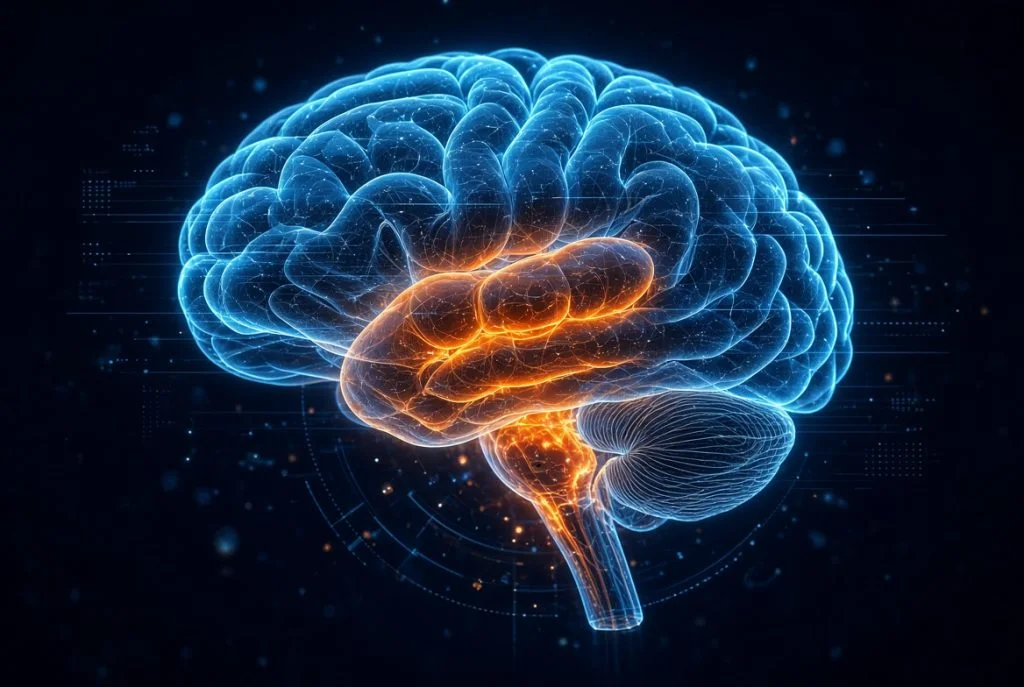
Is the Brain Really Two Separate Organs?
No.
This is where an attention-grabbing headline can easily become misleading.
The left and right hemispheres are not two completely independent brains or two separate organs. They remain physically connected through several pathways, and the brain also contains many other structures that coordinate activity between different regions.
Even in people with a severed corpus callosum, the hemispheres are not completely isolated from each other.
Other neural pathways can still allow communication between the two sides.
So, instead of saying that humans have “two brains,” a more accurate description is that the brain contains two highly interconnected hemispheres with partly specialized functions.
That may sound less dramatic, but the science behind it is arguably even more interesting.
The Left and Right Hemispheres Have Different Strengths
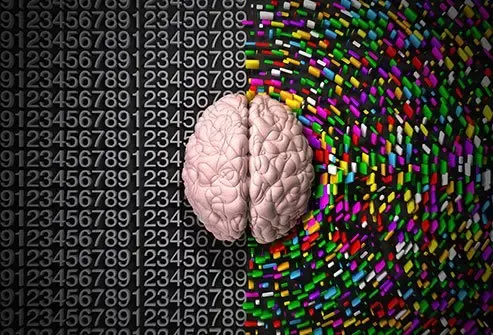
For years, popular culture has described the left hemisphere as logical and the right hemisphere as creative.
There is a small amount of truth behind the idea, but the reality is much more complicated.
Both hemispheres participate in thinking, creativity, emotions, memory, attention, and problem-solving.
Still, some functions tend to show stronger specialization on one side.
The Left Hemisphere
In most people, the left hemisphere plays an important role in:
- Language and speech
- Reading and writing
- Certain aspects of mathematical processing
- Sequential processing
- Fine control of some movements
- Understanding and producing many forms of language
Language is one of the clearest examples of hemispheric specialization.
For many people, important language-related regions are more strongly developed in the left hemisphere.
However, this does not mean the right hemisphere has nothing to do with language. It can contribute to understanding tone, context, emotion, humor, and other aspects of communication.
The Right Hemisphere
The right hemisphere is strongly involved in several functions, including:
- Spatial awareness
- Recognizing faces and patterns
- Understanding emotional tone
- Processing some types of visual information
- Attention across space
- Non-verbal aspects of communication
Again, the right hemisphere is not simply the “creative side.”
Creative thinking involves networks across the entire brain. The same is true for complex reasoning and emotional processing.
The brain is much more interconnected than the simple left-brain/right-brain personality test often suggests.
What Are Split-Brain Experiments?
Some of the most famous evidence for hemispheric independence comes from split-brain experiments.
Researchers discovered that when communication between the hemispheres was severely disrupted, each side could sometimes respond differently to the same situation.
One reason this can happen involves how visual information reaches the brain.
Information from the right side of the visual field is primarily processed by the left hemisphere, while information from the left side of the visual field is primarily processed by the right hemisphere.
Under normal circumstances, the corpus callosum helps both sides share this information.
When that communication is disrupted, researchers can sometimes observe different responses from each hemisphere.
For example, a person may be able to name an object when it is presented to the hemisphere responsible for their language abilities, but have difficulty verbally identifying the same object when the information is processed primarily by the other hemisphere.
These experiments provided important evidence that the two hemispheres can perform certain tasks independently.
Does Each Hemisphere Have Its Own Consciousness?
This is one of the most fascinating questions in neuroscience.
Some researchers have proposed that split-brain patients can show signs of partially independent processing. This has led to debates about whether consciousness itself can be divided.
However, science does not currently support the simple claim that every person has two completely separate conscious minds.
Consciousness is still one of the biggest unanswered questions in neuroscience.
Researchers continue to investigate how brain activity creates our unified experience of seeing, thinking, remembering, and feeling.
Split-brain research has made this question even more interesting because it shows that the brain can sometimes perform surprisingly complex processing without normal communication between its two hemispheres.
But that does not automatically prove that two completely independent people exist inside one skull.
The Corpus Callosum: The Brain’s Communication Highway
If the two hemispheres are specialized, how do they normally work together?
A major part of the answer is the corpus callosum.
It contains millions of nerve fibers that connect corresponding and complementary regions of the left and right hemispheres.
You can think of it as a massive communication network.
When you read a sentence, recognize someone’s facial expression, walk through a crowded room, or solve a complicated problem, different parts of your brain work together.
The two hemispheres are constantly exchanging information.
This communication allows the brain to combine specialized processing into a much more unified experience.
Without that cooperation, some tasks can become noticeably different.
Why Does This Matter for Neuroscience?
Understanding hemispheric specialization is more than an interesting scientific fact.
It can help researchers understand how the brain adapts after injury and how different neurological conditions affect communication between brain regions.
It can also help doctors and scientists study conditions involving language, movement, attention, perception, and cognition.
Brain research may eventually improve treatments for neurological disorders and help researchers develop better brain-computer interfaces.
However, it is important not to exaggerate the findings.
There is currently no scientific basis for claiming that every mental health condition is caused by poor communication between the left and right hemispheres.
Conditions such as depression, anxiety, and PTSD involve complex networks throughout the brain and body. They cannot be explained simply as a disagreement between two brain halves.
What About Learning Styles?
The left-brain/right-brain idea has also influenced education.
You may have heard that some people are “left-brained” because they prefer mathematics, while others are “right-brained” because they enjoy art.
Modern neuroscience does not support this as a reliable way to classify people.
A person who enjoys mathematics can use both hemispheres. So can an artist, writer, musician, engineer, or athlete.
Learning and problem-solving involve large networks of brain regions working together.
Instead of asking whether you are a “left-brain person” or a “right-brain person,” it is more useful to understand that different tasks recruit different combinations of brain systems.
Could This Change Brain-Computer Interfaces?
Possibly.
Scientists are increasingly interested in how brain activity can be measured and translated into useful information.
Brain-computer interfaces, or BCIs, aim to create a direct communication pathway between the brain and an external device.
Understanding how different brain regions process information could help researchers design more effective systems.
For example, researchers may need to know which neural signals are associated with movement, speech, vision, or other functions.
However, the idea that BCIs simply need to connect to “two separate brains” would be inaccurate.
The human brain is a highly interconnected network, and successful brain-computer technology will likely depend on understanding that complexity.
The Bigger Mystery: How Does One Brain Create One Experience?
Perhaps the most interesting part of this research is not the idea that the brain contains two hemispheres.
We already know that.
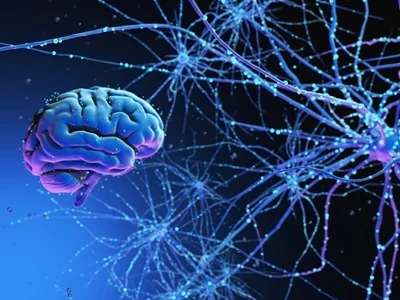
The deeper mystery is how billions of neurons and countless connections produce a seemingly unified experience.
You see the world as one continuous reality.
You have one sense of personal identity.
And You can remember something that happened yesterday and imagine what might happen tomorrow.
Yet underneath that experience, different brain regions are constantly processing information at the same time.
The brain does not appear to work like a single computer with one central processor.
Instead, it behaves more like a huge network in which many specialized systems communicate and cooperate.
The result is an experience that feels unified to us.
So, Do We Have Two Brains?
Not literally.
The human brain is one organ made up of many interconnected structures, including two major cerebral hemispheres.
Those hemispheres have different specializations, and split-brain research has demonstrated that they can sometimes process information with considerable independence when normal communication is disrupted.
But in everyday life, the left and right hemispheres work together constantly.
So the better scientific description is not “humans have two separate brains.”
It is this:
The human brain is one highly interconnected organ containing two specialized hemispheres that can perform some functions independently while normally working together.
That distinction matters because the real science is more interesting than the headline.
Final Thoughts
The human brain remains one of the biggest mysteries in science.
Research into the left and right hemispheres has shown us that the brain is not a simple machine. Different regions can specialize in different tasks, communicate through complex networks, and sometimes continue processing information even when normal connections are disrupted.
Split-brain research has also raised deeper questions about consciousness, identity, perception, and what it actually means to have a single mind.
So, while your brain is not literally two separate organs, it is fair to say that two remarkable hemispheres are constantly working together inside it.
And perhaps the biggest mystery is not whether your brain has two sides.
It is how those two sides, along with billions of neurons and countless connections, create the single experience you call “me.”
What do you think? Could understanding the two hemispheres help scientists solve the mystery of consciousness one day? Share your thoughts in the comments.
Also Read This
- OnePlus Festive Sale 2026: OnePlus 15, Nord 6, Tablets and More
- Tesla Makes a Strong Comeback as Q3 2026 Deliveries Beat Expectations
- OnePlus 16 India Launch: 9000mAh Battery, Specs and What We Know
- Mahindra Thar Electric Spotted Testing: Vision Thar Design Comes to Life
- RedMagic 12 Pro+ Geekbench 7 Performance: Snapdragon Power Could Raise the Gaming Phone Bar