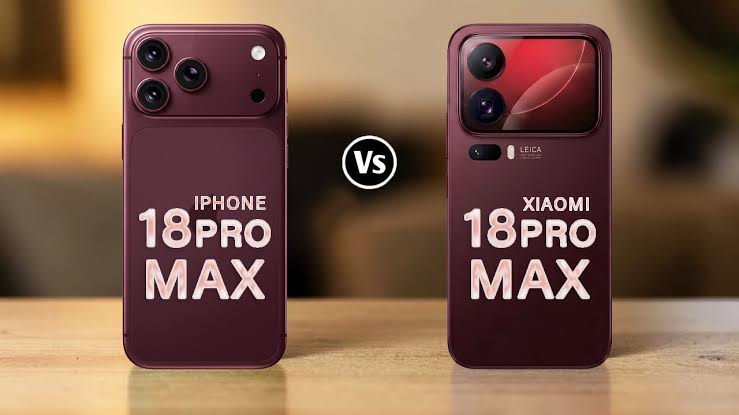
Xiaomi 18 Pro vs iPhone 18 Pro: When two flagship smartphones from Xiaomi and Apple go head-to-head, one question always comes first: which phone is actually faster?
The Xiaomi 18 Pro vs iPhone 18 Pro comparison is especially interesting because both phones take a different approach to performance. Xiaomi focuses on powerful hardware, a large battery, fast charging and Android flexibility. Apple focuses on custom silicon, tight software integration and sustained performance.
The Xiaomi 18 Pro was launched in China in September 2026. It comes with Qualcomm’s Snapdragon 8 Elite Gen 6 chipset, up to 16GB of RAM and a 7,000mAh battery. The iPhone 18 Pro, meanwhile, uses Apple’s A20 Pro chip and a new-generation vapour chamber designed to improve sustained performance.
So, which one wins the Xiaomi 18 Pro vs iPhone 18 Pro speed test? Let’s break it down.
Xiaomi 18 Pro vs iPhone 18 Pro: Performance Hardware
The first thing to look at is the hardware inside both smartphones.
The Xiaomi 18 Pro is powered by the Snapdragon 8 Elite Gen 6. It is built on a 2nm process and is paired with LPDDR5X RAM and UFS 4.1 storage. Xiaomi offers memory configurations that go up to 16GB RAM and 1TB storage.
The iPhone 18 Pro uses Apple’s A20 Pro chip. Apple says the chip features a 6-core CPU, a 7-core GPU and a Dual 16-core Neural Engine. It also supports hardware-accelerated ray tracing for demanding graphics workloads.
On paper, Xiaomi has the advantage in RAM capacity. Apple, however, has a major advantage in hardware and software integration. The real-world result depends on the type of task.
Winner for hardware flexibility: Xiaomi 18 Pro
Winner for chip and software integration: iPhone 18 Pro
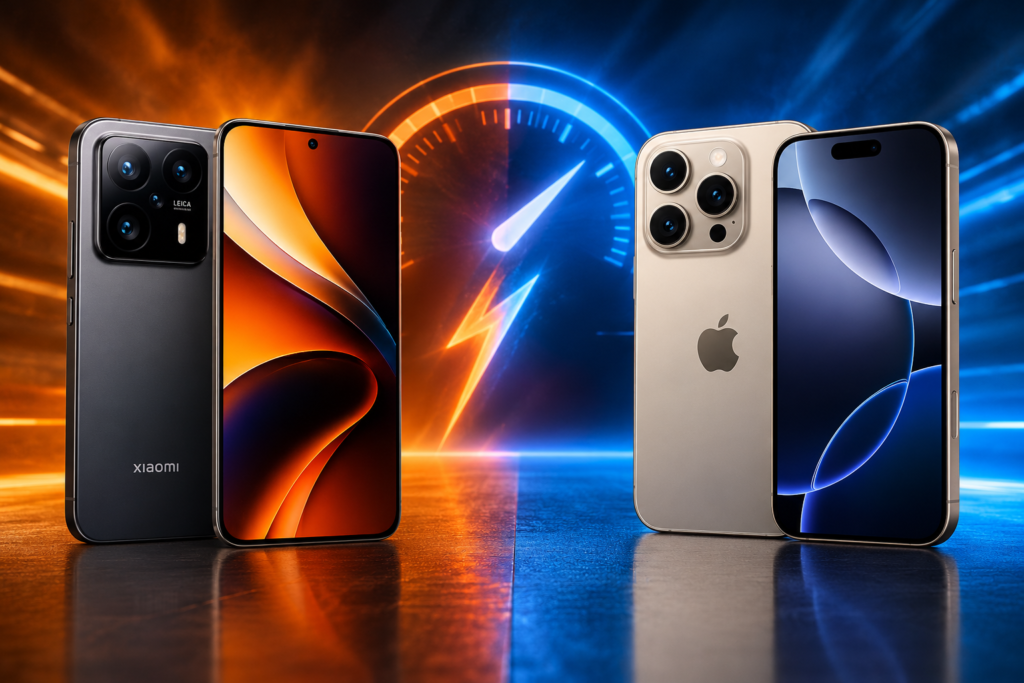
App Opening Speed
Opening everyday apps is one of the easiest ways to understand smartphone speed.
Apps such as Instagram, YouTube, Spotify, Chrome and WhatsApp should open quickly on both phones. These are flagship devices, so users should not expect a major difference during normal daily use.
The iPhone 18 Pro has Apple’s A20 Pro chip and iOS 27 working together. This combination gives Apple strong control over app performance and background processes.
The Xiaomi 18 Pro runs Android 17 with HyperOS 4. It also has a high-end Snapdragon processor and fast UFS 4.1 storage. This gives it plenty of power for launching apps and switching between demanding tasks.
In a real-world test, the difference between the two phones may be very small. Both should feel extremely fast during everyday use.
App opening verdict: Very close
Gaming Performance
Gaming is where the comparison becomes more interesting.
The Xiaomi 18 Pro has a Snapdragon 8 Elite Gen 6 processor and a large 7,000mAh battery. The combination is designed for demanding workloads such as high-end gaming and long sessions.
The iPhone 18 Pro also targets demanding games with its A20 Pro chip and hardware-accelerated ray tracing. Apple has also introduced a new vapour-chamber cooling system to help the phone maintain high performance for longer periods.
This means the winner cannot be decided simply by looking at the processor name.
For games that are heavily optimised for iOS, the iPhone can deliver excellent results. Android games that are well optimised for Snapdragon hardware can also perform extremely well on the Xiaomi 18 Pro.
For serious gamers, sustained performance is more important than a short benchmark score.
Gaming verdict: Both are flagship-level performers
Multitasking and RAM Management
This is one area where Xiaomi has a clear hardware advantage.
The Xiaomi 18 Pro is available with up to 16GB of RAM. That gives the phone plenty of memory for keeping multiple applications active. Xiaomi also uses fast UFS 4.1 storage on the device.
The iPhone 18 Pro uses Apple’s tightly controlled memory management system. Apple does not need to match Android phones RAM-for-RAM because iOS handles background applications differently.
In a practical test, you could open 15 to 20 apps, leave the phone for several minutes and then return to those applications.
The Xiaomi 18 Pro may have an advantage when keeping more applications in memory. However, the iPhone 18 Pro can still reopen applications very quickly because of its powerful chip and software optimisation.
So, having more RAM does not automatically mean better overall performance.
Multitasking verdict: Xiaomi 18 Pro has the hardware advantage
Video Editing and Export Speed
For content creators, video export is one of the most important performance tests.
The iPhone 18 Pro is particularly interesting for creators. Apple supports advanced video features, including ProRes, ProRes RAW and 4K video recording. The A20 Pro chip also includes dedicated hardware and neural processing designed for demanding workloads.
The Xiaomi 18 Pro also has serious video capabilities. Its camera system can record up to 8K video, and its Snapdragon platform provides plenty of processing power for editing and rendering.
However, actual export times can change depending on the editing app, video resolution, effects, codec and temperature.
For apps such as CapCut and other popular editors, the best phone can vary from one project to another.
Video editing verdict: iPhone 18 Pro gets an edge for creator-focused workflows
Thermal Performance: Which Phone Can Stay Fast?
Peak performance is only one part of the speed story.
A phone can deliver a huge benchmark score for a few minutes, but sustained performance matters more during long gaming sessions or large video exports.
Apple has specifically redesigned the thermal system in the iPhone 18 Pro. The company says its new vapour chamber has three times more surface area than the previous generation and helps improve sustained performance. Apple claims up to a 40% gain over the previous generation in sustained performance.
The Xiaomi 18 Pro also has flagship-level hardware and a large 7,000mAh battery. However, real-world thermal performance depends on factors such as room temperature, game settings, brightness and workload.
This is why a proper long-term test is more useful than a single benchmark run.
Thermal performance verdict: iPhone 18 Pro has a strong advantage on paper
Benchmark Performance vs Real-World Speed
Benchmarks are useful, but they do not tell the whole story.
A phone can score higher in Geekbench or another benchmark and still feel almost identical during everyday use.
Both the Xiaomi 18 Pro and iPhone 18 Pro have more than enough power for normal tasks. Social media, web browsing, video streaming, photography and messaging should feel fast on either device.
The difference becomes easier to notice when you perform heavier tasks. Gaming, AI processing, video editing and long multitasking sessions put much more pressure on the processor.
That is where the Snapdragon 8 Elite Gen 6 and A20 Pro become more interesting.
Battery and Charging
Battery life is another important part of the speed experience.
The Xiaomi 18 Pro packs a huge 7,000mAh battery and supports 100W fast charging. It also supports wireless charging.
The iPhone 18 Pro has a smaller battery by comparison, but Apple’s hardware and software optimisation can help it deliver strong battery efficiency. Apple rates the iPhone 18 Pro for up to 34 hours of video playback.
For users who care about fast charging and a large battery, Xiaomi has the more aggressive hardware approach.
For users who prefer Apple’s overall power efficiency and ecosystem, the iPhone remains a strong choice.
Battery and charging verdict: Xiaomi 18 Pro
Which Phone Is Faster in Daily Use?
This is probably the most important question.
For normal daily use, you are unlikely to see a dramatic difference between the two.
Both phones are powerful enough to handle social media, multitasking, gaming, photography and video editing without major slowdowns.
The Xiaomi 18 Pro offers more RAM, a larger battery and very powerful Snapdragon hardware. The iPhone 18 Pro combines the A20 Pro chip with iOS 27 and a redesigned cooling system.
So, instead of asking which phone is simply “faster”, it makes more sense to ask which phone is faster for your type of work.
Xiaomi 18 Pro vs iPhone 18 Pro: Final Verdict
The Xiaomi 18 Pro vs iPhone 18 Pro battle is much closer than a simple specification comparison suggests.
The Xiaomi 18 Pro is an excellent choice for users who want powerful Android hardware, high RAM capacity, a huge battery and very fast charging. Its Snapdragon 8 Elite Gen 6 platform makes it a serious flagship for gaming and heavy multitasking.
The iPhone 18 Pro is better suited to users who want Apple’s custom silicon, strong sustained performance, advanced video features and tight hardware-software integration. Its A20 Pro chip and redesigned vapour chamber make it one of Apple’s most performance-focused iPhones yet.
Our quick verdict:
Best for gaming and multitasking: Xiaomi 18 Pro
Best for fast charging and battery capacity: Xiaomi 18 Pro
Best for video and creator workflows: iPhone 18 Pro
Best for sustained performance: iPhone 18 Pro
Best overall performance: Very close, with the winner depending on your workload
In the end, both phones are built for users who want flagship-level speed. The Xiaomi 18 Pro takes a hardware-heavy approach, while the iPhone 18 Pro focuses on custom silicon and software optimisation.
So, if you had to choose just one, which would you pick: Xiaomi 18 Pro or iPhone 18 Pro? Let us know in the comments.
Also Read This
- The Human Brain Is Two Separate Organs? What Neuroscience Really Says
- 10 New Cars Expected to Launch in October 2026 in India: SUVs, EVs and Sedans
- 2027 Mercedes GLE: Jab S-Class Ki Luxury Aur SUV Ka Power Mila Ek Jagah
- Maruti Suzuki Arena Cars Get Up to Rs 1.36 Lakh Benefits in October 2026
- OPPO F35 Pro vs Vivo V70 FE vs OnePlus Nord 6: Which Phone Is Best?