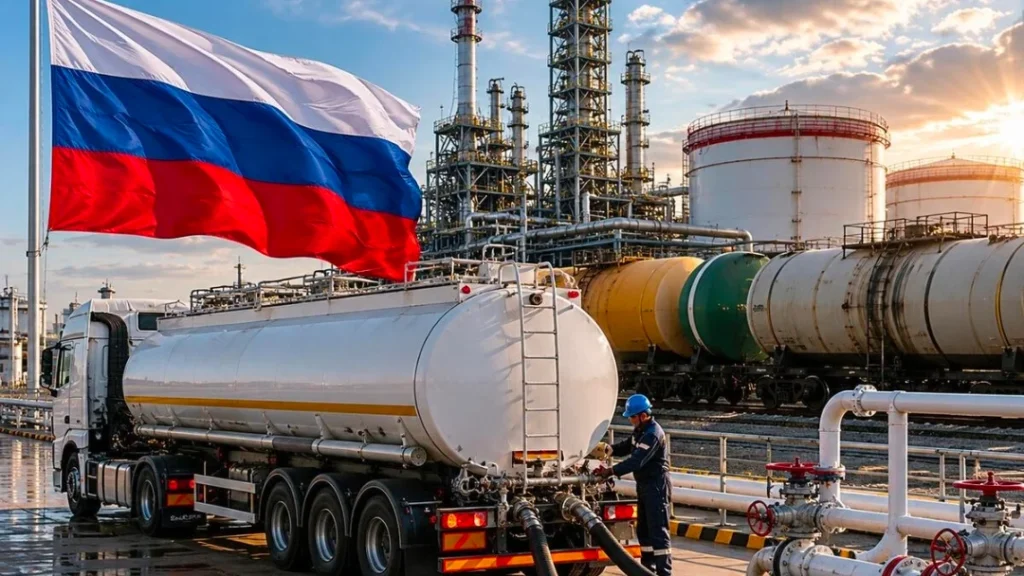
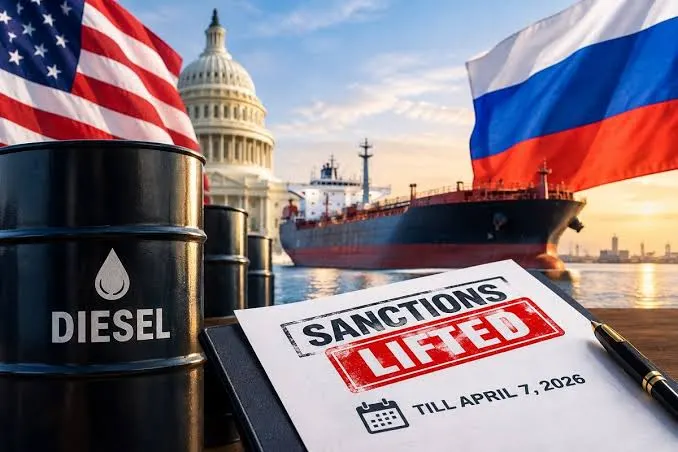
US Lifts Sanctions on Russian: The United States has temporarily eased sanctions on Russian diesel in a major shift in energy policy. The decision followed a discussion between US President Donald Trump and Russian President Vladimir Putin. The agreement aims to increase fuel supplies and bring down rising diesel prices.
On October 9, 2026, Trump announced that Russia would supply more than 300,000 metric tons of diesel to the US and global markets. Further shipments are also planned. The US Treasury Department issued a temporary licence allowing transactions involving Russian-origin diesel until April 7, 2027. Reuters reported the announcement and the expected fuel supplies.
Let’s look at the key facts and possible economic impact.
Why Did the US Ease Sanctions on Russian Diesel?
The main reason behind this decision is the sharp rise in diesel prices and concerns about fuel supplies.
Diesel plays a vital role in the modern economy. It powers trucks, farm equipment, industrial machinery and many commercial vehicles. When diesel becomes expensive, businesses often face higher operating costs.
These costs can eventually affect consumers through more expensive goods and services.
The US has also faced pressure to reduce fuel costs. Rising diesel prices have created challenges for farmers, transport companies and other fuel-dependent businesses.
Against this background, the Trump administration decided to allow Russian diesel supplies under a temporary licence. The move is intended to provide additional fuel to a market facing supply pressure.
How Much Russian Diesel Will Enter the Market?
The announced agreement includes several planned deliveries.
According to Trump’s announcement, Russia will initially supply more than 300,000 metric tons of diesel. Another 500,000 tons are planned for November, followed by an additional one million tons.
Trump also indicated that further supplies could follow, depending on the condition of Russian refineries.
These figures represent announced supply commitments. The actual market impact will depend on whether the fuel is delivered on schedule and reaches buyers.
The amount also needs to be considered in the context of overall market demand. Even a large shipment may have a limited effect if global fuel consumption remains high or other supply disruptions continue.
Therefore, the agreement could offer some relief, but it is too early to conclude that diesel prices will fall significantly over the long term.
How Could the Decision Affect Global Diesel Prices?
1. Additional Supply Could Ease Price Pressure
Fuel prices depend on supply, demand, transport costs and market expectations.
When additional diesel becomes available, buyers may have more options. This can reduce competition for limited supplies and ease pressure on prices.
The announcement has already affected diesel market trading. However, a short-term market reaction does not guarantee a lasting price decline.
If deliveries are delayed or demand continues to exceed supply, prices could remain high.
2. Transport Costs May Become More Stable
Diesel is essential for road freight and many logistics operations. Transport companies use it to move food, fuel, construction materials and consumer products.
When diesel prices rise, these companies often face higher expenses. Some businesses pass those costs on to customers.
If additional supplies help reduce fuel costs, transport expenses could become more manageable. This may support price stability across several industries.
However, the effect will depend on the scale and duration of any price reduction.
3. Farmers and Industrial Businesses Could Benefit
Agriculture is another sector that depends heavily on diesel. Tractors, harvesters, irrigation equipment and generators often require fuel to operate.
High diesel prices can increase farming costs, especially during planting and harvesting seasons.
Manufacturers and construction companies also depend on diesel-powered equipment and transport services.
More stable fuel prices could help these businesses plan their expenses. Still, the benefits will vary by country, industry and local fuel market.
Will Russian Diesel Reduce Inflation?
Diesel prices can influence inflation because fuel is an important input for many economic activities.
When transport and production costs rise, businesses may increase the prices of their products. This can make everyday goods more expensive.
For example, higher freight costs can affect the price of groceries, building materials and manufactured products.
If Russian diesel adds meaningful supply to the market, it could help reduce some of this cost pressure.
However, lower diesel prices do not automatically mean lower inflation.
Inflation is also influenced by food prices, wages, interest rates, housing costs, currency movements and other energy prices. A temporary reduction in diesel costs may slow price increases without making goods cheaper overall.
For this reason, the agreement should be viewed as one possible source of relief rather than a complete solution to inflation.
What Does the Decision Mean for Russia?
The easing of sanctions creates an opportunity for Russia to sell diesel into markets covered by the US temporary licence.
Energy exports are an important source of revenue for Russia. Additional sales could generate income for Russian businesses and the government.
This is also why the decision has attracted criticism.
Western sanctions were designed in part to restrict Russian revenue following its invasion of Ukraine in 2022. Allowing additional diesel transactions could weaken some of the economic pressure that these measures were intended to create.
The financial impact will depend on actual export volumes, selling prices and the payments received by Russian suppliers.
The move therefore presents a difficult policy choice. The US wants to improve fuel availability and control prices, but it must also consider the wider consequences of easing restrictions on Russia.

Why Has the Decision Faced Criticism?
The agreement has created tensions between Washington and some of its allies.
Ukrainian President Volodymyr Zelenskyy criticised the decision, arguing that additional revenue for Russia would not help bring peace. Some US lawmakers also questioned the move.
Germany has stated that it will maintain its own sanctions against Russia and continue supporting Ukraine, despite the US decision. This highlights the difference between Washington’s temporary energy policy and the position of some European partners.
The disagreement shows how difficult it can be to balance economic needs with foreign policy goals.
For the US, increasing fuel supply is an immediate economic priority. For Ukraine and its supporters, restricting Russian revenue remains an important part of the effort to pressure Moscow over the war.
Both concerns will continue to shape the debate around the agreement.
Will the US Decision Affect India?
India is an important participant in global energy markets, so changes in international fuel prices can affect its economy.
However, the impact on India will not necessarily be direct. The US temporary licence does not automatically remove restrictions imposed by other countries or change India’s existing fuel arrangements.
If the agreement contributes to lower international diesel prices, India could benefit through reduced pressure on transport and industrial costs.
Lower global fuel prices may also help ease some inflationary pressure. The extent of any benefit would depend on international price movements, exchange rates, domestic taxes and local fuel pricing policies.
India’s energy market has its own supply sources and pricing factors. Therefore, it would be premature to predict an immediate reduction in Indian petrol or diesel prices based only on this announcement.
Consumers should wait for actual market changes rather than assume that international developments will quickly affect prices at local fuel stations.
What Happens Next?
The next important step is to see whether Russia delivers the promised diesel supplies and whether those shipments reach the market within the announced time frame.
The policy could be extended, revised or allowed to expire. Any change would depend on the administration’s decisions and the wider political and economic situation.
For now, the agreement offers an additional route for Russian diesel supplies, but its long-term effectiveness remains uncertain.
Conclusion: US Lifts Sanctions on Russian
The US decision to temporarily ease sanctions on Russian diesel is an important development in global energy policy. It reflects growing concern about high fuel prices and the need to improve supply.
The agreement also raises concerns about Russian energy revenue and the future of Western sanctions. The response from Ukraine and Germany shows that the decision has consequences beyond the fuel market.
Ultimately, the real test will be whether the promised supplies arrive and provide lasting relief to consumers and businesses.
US Lifts Sanctions on Russian: click here
Also Read This
- Garmin CIRQA vs Fitbit Air vs WHOOP: Which Fitness Tracker Is Best in 2026?
- Dell XPS 16 Creator Edition: RTX Spark, 3.2K OLED Display and Powerful AI Performance
- iOS 27 Update: Is Apple Pushing iPhone Users to Upgrade From iOS 26?
- Tata Harrier EV Discounts Touch ₹2.75 Lakh in October 2026: Is It the Right Time to Buy?
- Mansory Bugatti Chiron Vivere: Inside the One-Off Hypercar Linked to a Mexican Collector
US Lifts Sanctions on Russian
US Lifts Sanctions on Russian