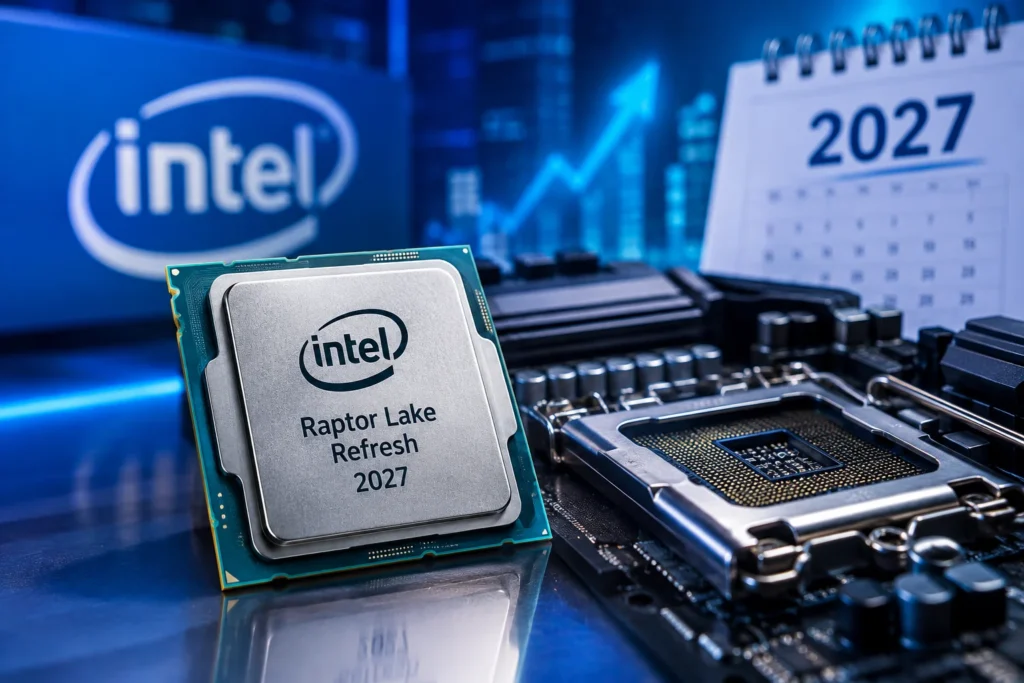
Intel Raptor Lake Refresh: Intel may not be ready to retire its Raptor Lake platform just yet. Recent reports about Gigabyte motherboard BIOS updates suggest that new Intel processors for the existing LGA 1700 socket could arrive in early 2027. This development has caught the attention of PC builders who want better performance without replacing their entire system.
The reported plans are particularly interesting because the PC market is still dealing with changing memory prices and the cost of upgrading to newer platforms. For budget-conscious users, another generation of compatible processors could offer a practical alternative.
However, Intel has not yet published the complete specifications, prices, or official launch details for these upcoming CPUs. Here is what the latest reports suggest and what buyers should know before making an upgrade decision.
Intel Raptor Lake Refresh 2027: What Is Happening?
Recent reporting from Tom’s Hardware points to Gigabyte BIOS updates that suggest support for upcoming Intel processors on selected LGA 1700 motherboards. The reports indicate that these CPUs could arrive in early 2027.
The development suggests that Intel may continue using its established processor platform rather than moving every budget-focused customer to a newer motherboard and memory configuration.
Intel’s Raptor Lake family includes 13th-generation Core processors, while Raptor Lake Refresh is associated with the 14th-generation desktop lineup. The upcoming products are being discussed in reports as another extension of this platform.
It is important to understand that a motherboard BIOS update is evidence of possible hardware support, not a complete product announcement. Intel has yet to confirm the final product names, specifications, pricing, and availability.
For now, the reported launch should be treated as a strong indication of a possible product direction rather than a fully confirmed retail release.
Why Is Intel Continuing With the LGA 1700 Platform?
There are several practical reasons why Intel might continue supporting an older platform. Cost, memory compatibility, and the needs of existing PC owners could all play an important role.
1. DDR4 Memory Still Matters to Budget PC Builders
One of the biggest advantages of the LGA 1700 platform is its support for both DDR4 and DDR5 memory, depending on the motherboard.
Many users already own DDR4 RAM and a compatible motherboard. Moving to a newer platform may require them to purchase a new motherboard and memory kit, increasing the total upgrade cost.
This is especially important for students, casual gamers, office users, and people building their first desktop PC.
If the reported processors support existing LGA 1700 boards, some users could upgrade their CPU without replacing as many components. However, compatibility will depend on the exact motherboard model and its BIOS support.
2. Reusing an Established Platform Can Reduce Costs
Developing a completely new processor architecture requires significant engineering, validation, and manufacturing investment. Continuing with an established design can help a company serve price-sensitive customers while it develops newer products.
Intel’s Raptor Lake family is based on the Intel 7 manufacturing process. Its established design and production experience could make it useful for certain market segments.
That does not automatically mean every new processor will be cheaper to manufacture or sell. Final prices will depend on production costs, supply, competition, and Intel’s product strategy.
Still, extending an existing platform could give Intel another way to offer desktop processors at different price points.
3. Existing PC Owners Want Affordable Upgrades
A processor upgrade is not always about buying the newest technology. Many users simply want better gaming performance, smoother multitasking, or faster everyday computing.
For someone with a compatible motherboard, a new CPU could be more attractive than rebuilding an entire PC.
This is where another LGA 1700 processor lineup could make sense. It could help Intel serve existing customers while giving budget buyers more options in the market.
However, the actual value will depend on how much performance these processors deliver compared with existing models.
What Can We Expect From the 2027 Raptor Lake Refresh?
At this stage, the exact specifications remain unconfirmed. Buyers should therefore avoid treating leaked model names, core counts, or clock speeds as final specifications.
Based on the reported direction, these are the main areas worth watching.
1. New Processor Models
Reports suggest that Intel could introduce additional processors for its existing desktop platform. These might target entry-level, mainstream, and mid-range buyers.
The final product lineup has not been officially confirmed. Intel could change the names, specifications, or release plans before launch.
2. Compatibility With Selected LGA 1700 Motherboards
Motherboard compatibility could become one of the most important features of this release.
Reports indicate that selected B760 and H610 motherboards may receive support through BIOS updates. However, support should not be assumed for every LGA 1700 motherboard.
Owners of B660, B760, Z690, Z790, or other compatible-platform boards should check their manufacturer’s official CPU support list before purchasing a processor.
A shared socket does not guarantee that every motherboard can run every CPU.
3. Possible DDR4 and DDR5 Support
Memory compatibility could remain a major selling point if the new processors continue the platform’s existing flexibility.
DDR4 systems may appeal to buyers who want to reuse their current memory, while DDR5 configurations may offer a different balance of bandwidth and performance.
The actual memory standards and supported speeds for any new models will need to be confirmed through official specifications.
4. Performance and Power Consumption
Some buyers may hope for higher clock speeds, improved power management, or other refinements. However, there is currently no confirmed basis for promising a specific clock-speed increase or performance improvement.
It would also be premature to assume that these processors will consume less power or run cooler than existing models.
Independent benchmarks will be necessary to establish how the new CPUs compare with current Raptor Lake and newer Intel processors.
How Could the New Processors Affect the PC Market?
If Intel launches new CPUs for LGA 1700 in 2027, the biggest impact could be on affordable desktop upgrades.
Many users do not need the latest flagship processor. They need a reliable computer for gaming, studying, office applications, video editing, or everyday multitasking.
A reasonably priced CPU that works with an existing motherboard could make these upgrades easier.
The release could also influence prices for older processors. If buyers have access to newer compatible options, retailers may adjust the prices of existing models to remain competitive.
However, lower prices are not guaranteed. Availability, demand, and competition from AMD will all influence the final market situation.
For Indian buyers, the total platform cost will be particularly important. A processor that looks affordable on its own may not offer good value if it requires expensive memory, a new motherboard, or additional cooling.
Comparing the complete PC build cost will be more useful than looking at the CPU price alone.
Advantages and Disadvantages of Another Raptor Lake Refresh
Potential Advantages
- Lower upgrade costs: Existing users may be able to reuse their motherboard and RAM.
- More processor choices: Additional models could give budget buyers more flexibility.
- DDR4 compatibility: Supported configurations could help users avoid an immediate memory upgrade.
- A familiar platform: Builders can continue using an established desktop ecosystem.
- Potential price competition: New products could encourage retailers to adjust prices across the market.
Potential Disadvantages
- Limited architectural progress: Another refresh may not deliver the same changes as a completely new architecture.
- Uncertain performance gains: No confirmed benchmarks are available for the reported processors.
- Motherboard restrictions: Not every LGA 1700 board will necessarily support the new CPUs.
- Power and cooling concerns: Actual consumption and temperatures will depend on the final processor specifications.
- Uncertain pricing: The new models may not be competitive if their prices are too close to newer alternatives.
These points highlight why the final specifications and independent reviews will matter more than the refresh label itself.
Should You Wait for Intel’s 2027 Processors?
The answer depends on your current PC and how soon you need an upgrade.
If You Already Own a 12th, 13th, or 14th Gen Intel PC
There is no need to rush into a purchase based only on the current reports.
First, check whether your existing processor is limiting your gaming performance or daily work. If it still meets your needs, waiting for official specifications and benchmarks may be the better choice.
If you have a compatible LGA 1700 motherboard, a future processor could provide another upgrade option. However, the benefit will depend on your current CPU and the performance of the new model.
If You Are Building a Budget Gaming PC
Compare the prices of existing Intel processors, AMD Ryzen alternatives, motherboards, and memory kits.
Do not assume that a 2027 processor will automatically offer the best value. An older CPU with a price reduction could be a better purchase, especially if you need a computer immediately.
On the other hand, if your current system is working well, waiting for the new lineup could give you more options.
If You Want a High-End PC for the Long Term
A platform’s upgrade path should be part of your decision.
Before buying, consider performance, power consumption, motherboard features, memory costs, and the availability of future processors. A newer platform may be more attractive if it offers features or upgrade options that matter to you.
The best choice is the one that meets your needs and budget, not necessarily the one with the newest product name.
Intel Raptor Lake Refresh 2027 vs Newer Platforms
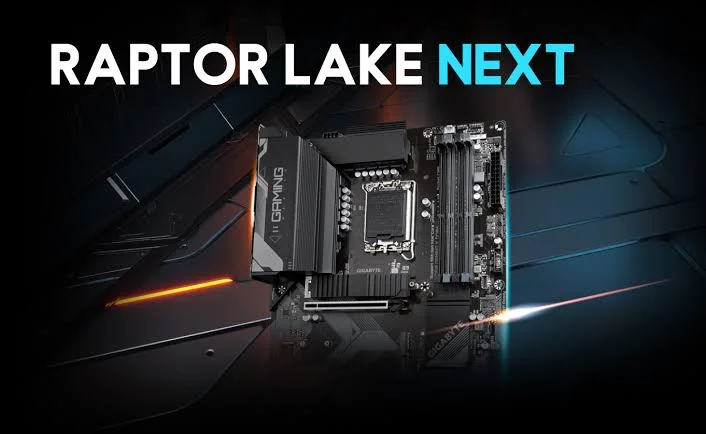
The upcoming processors cannot be compared fairly until Intel releases their specifications and independent reviewers test them. Still, the following table explains the main differences buyers should consider.
| Factor | Possible Raptor Lake Refresh | Newer Platforms |
|---|---|---|
| Motherboard cost | Potentially lower if the existing board is supported | May require a new motherboard |
| Memory upgrade | Could allow existing DDR4 or DDR5 memory to be reused | Depends on the platform |
| CPU performance | Not yet confirmed | Varies by processor |
| Power efficiency | Not yet confirmed | Varies by processor |
| Upgrade path | Depends on final compatibility | Depends on the platform’s future support |
| Best reason to consider it | Affordable upgrade potential | Newer features and platform options |
This comparison is intended as a buying guide, not a benchmark result. Actual value will depend on the final products and their prices.
Final Verdict: Intel Raptor Lake Refresh
Intel’s reported plans for new LGA 1700 processors in 2027 suggest that the company may continue serving users who want affordable upgrades without replacing their entire desktop system.
The strategy could make sense in a market where memory prices and platform costs influence buying decisions. Support for existing hardware could be particularly valuable for budget-conscious users.
However, another refresh is not automatically a major technological breakthrough. Its success will depend on performance, power consumption, pricing, and real-world motherboard compatibility.
For existing Intel PC owners, the smartest move is to wait for official specifications and independent reviews before spending money. For new PC builders, comparing the complete cost of Intel and AMD systems will provide a clearer picture of which platform offers better value.
As of October 2026, the reported 2027 launch remains a developing story, and the final product details have yet to be confirmed by Intel.
Intel Raptor Lake Refresh
Sources and Further Reading
- Tom’s Hardware: Gigabyte BIOS Updates and Intel’s Reported 2027 CPU Plans
- Intel: 13th Gen Core Processor Specifications
- Intel: 13th and 14th Gen Core Processor Memory Support
Also Read This
- Tata Harrier EV Discounts Touch ₹2.75 Lakh in October 2026: Is It the Right Time to Buy?
- Mansory Bugatti Chiron Vivere: Inside the One-Off Hypercar Linked to a Mexican Collector
- US Lifts Sanctions on Russian Diesel: What It Means for Global Fuel Prices
- Amazon Great Indian Festival 2026: iPhone 16 and iPhone 17e Deals, Prices and Bank Offers
- Why Green and Sustainable Cars Are No Longer Just a Trend in India