
Agentic AI: Artificial intelligence has changed the way we work, search for information, and create content. Over the past few years, AI chatbots have become popular because they can answer questions, write articles, generate images, and help with everyday tasks. However, the next stage of AI could be much bigger.
The focus is now shifting from AI that gives answers to AI that can complete tasks. This shift has brought Agentic AI into the spotlight. These systems can work towards a goal, use digital tools, and perform several steps with limited human guidance.
In simple terms, the future of AI may not be limited to chatbots. Instead, we could see more autonomous digital workers that help people and businesses complete real-world tasks.
What Is Agentic AI?
Agentic AI refers to AI systems that can plan tasks, make decisions within defined limits, use tools, and take action to achieve a specific goal. Unlike a basic chatbot, an AI agent can often manage a series of connected tasks instead of responding to a single prompt.
For example, a chatbot can suggest a travel plan for Goa. It may recommend flights, hotels, restaurants, and places to visit. However, you usually need to visit booking websites and make the reservations yourself.
An AI agent could take this process further. You might ask it to plan a three-day trip within a budget of ₹20,000. Depending on its tools and permissions, it could compare available options, prepare an itinerary, and help complete bookings.
However, payments and other important actions may still require your approval. The exact capabilities depend on the system, its access, and the safeguards in place.
The key difference is simple. A chatbot mainly provides information, while an AI agent can use that information to carry out tasks.
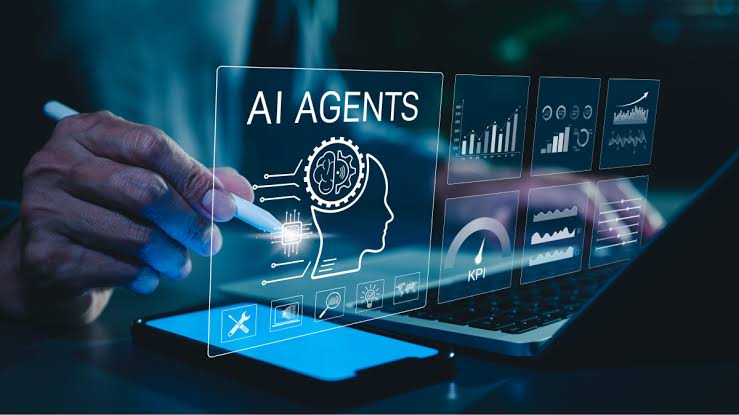
How Agentic AI Differs From Generative AI
Generative AI creates new content, such as text, images, audio, and computer code. Popular AI chatbots use this technology to answer questions and assist with creative work.
Agentic AI builds on these capabilities by adding planning, tool use, and action. Instead of stopping after producing an answer, an agent can work through multiple steps towards a defined objective.
For instance, generative AI can draft an email for a business. An AI agent with suitable access could draft the email, check the recipient details, and prepare it for sending. If permission allows, it may also send the email.
This distinction matters because not every AI system that generates content is an autonomous agent. The level of autonomy depends on its design, available tools, and operating rules.
How Autonomous Digital Workers Work
An autonomous digital worker combines several capabilities to complete tasks. These capabilities help it understand instructions, choose actions, and respond when something goes wrong.
Reasoning and Planning
First, the AI agent analyses the goal. It then breaks the task into smaller steps and decides which actions may help achieve the desired result.
For example, an agent asked to prepare a market research report may identify relevant sources, collect information, compare findings, and organise the results into a report.
Tool Use and Integration
AI agents can connect with digital tools, depending on the permissions they receive. These tools may include web browsers, spreadsheets, email platforms, calendars, databases, and business software.
As a result, agents can move beyond generating suggestions. They may also perform practical tasks across connected applications.
Memory and Context
Some AI agents can use stored information to maintain context across tasks. This may include project instructions, user preferences, or details from earlier interactions.
However, memory is not always permanent or unlimited. Its availability depends on the system, and sensitive information should only be stored when necessary and properly protected.
Feedback and Error Correction
An AI agent can check whether an action worked as expected. If a step fails, it may try another approach or ask a human for help.
Even so, self-correction is not perfect. Agents can misunderstand instructions, repeat errors, or produce incorrect results. Therefore, testing and human oversight remain important.
OpenAI: AI Agents click here
Why Agentic AI Could Change the Way We Work
Agentic AI could affect many industries because businesses handle large numbers of repetitive digital tasks. When implemented carefully, these systems may help teams save time and focus on more valuable work.
Better Productivity and Time Savings
Employees often spend hours entering data, organising documents, preparing reports, and responding to routine emails. AI agents could automate parts of these workflows.
For example, an agent might collect data from approved sources, organise it in a spreadsheet, and prepare a summary for review. This could reduce manual effort and help employees finish routine tasks faster.
However, the results depend on data quality, workflow design, and the complexity of the task. Human review may still be necessary.
Support for Business Teams
AI agents could become useful assistants for marketing, sales, customer support, and administration teams.
A marketing manager, for example, could ask an agent to research a topic, prepare social media drafts, organise a content calendar, and create a performance summary. The manager could then review the work and make the final decisions.
This approach allows people to focus more on strategy, creativity, and customer relationships while AI handles suitable routine tasks.
Faster Service and Continuous Operations
Unlike human employees, software systems can operate outside normal office hours. With suitable infrastructure, an AI agent can monitor tasks, process requests, and flag problems at any time.
This may help businesses respond faster to common customer questions or monitor routine workflows overnight.
Still, continuous operation does not guarantee perfect accuracy. Systems need maintenance, security checks, and clear rules for handling unexpected situations.

Real-World Uses of Agentic AI
Agentic AI has potential applications across several industries. Its practical value depends on how well it fits the task and the safeguards surrounding it.
Customer Support
AI agents could classify customer requests, retrieve relevant information, and suggest solutions. More advanced systems may resolve routine issues within approved limits.
Complex complaints, sensitive cases, and unusual requests should still be passed to human support staff.
Data Entry and Office Administration
Businesses could use AI agents to extract information from documents, update approved records, organise files, and prepare routine reports.
For office assistants and data entry professionals, these tools may change daily responsibilities. Learning spreadsheet skills, data verification, and AI-assisted workflows could become increasingly useful.
Research and Content Creation
AI agents may help researchers gather information, compare sources, organise notes, and prepare initial drafts. Content teams could also use them to plan articles and manage publishing workflows.
However, facts must be checked before publication. AI-generated content can contain outdated details, misleading claims, or incorrect references.
Sales and Marketing
Sales teams could use AI agents to organise leads, prepare follow-up drafts, update customer records, and summarise interactions.
Marketing teams could also use agents to analyse campaign data and prepare content suggestions. Human approval remains valuable for brand decisions and customer communication.
What Are the Biggest Challenges of Agentic AI?
Although autonomous digital workers offer useful possibilities, they also create important technical and business challenges.
Trust and Human Control
An AI agent may make a mistake when interpreting instructions or choosing an action. If it has permission to send emails, change records, or spend money, that mistake could have real consequences.
Businesses should set clear limits and require human approval for high-impact actions. They should also keep records of important decisions and actions.
Cybersecurity and Data Privacy
AI agents may need access to accounts, documents, and business applications. This access can create security risks if permissions are too broad or systems are poorly protected.
Companies should follow the principle of least privilege. This means giving each agent only the access it needs to perform its assigned tasks.
Strong authentication, secure integrations, activity monitoring, and regular security testing are also important.
Job Displacement and Changing Skills
Automation could reduce the need for some repetitive tasks. As a result, certain entry-level roles may change, particularly in data processing, administration, and routine customer support.
However, the overall effect on employment is not yet certain. AI may replace some tasks while creating demand for new skills and responsibilities.
Workers can prepare by improving their digital skills, learning to use AI tools, and developing communication, problem-solving, and critical thinking abilities.
Reliability and Accountability
An agent may complete several steps successfully but still make a mistake that affects the final result. It can also struggle with unexpected situations or unclear instructions.
For this reason, organisations need testing, performance monitoring, clear ownership, and a way to stop an agent when necessary.
Businesses must also decide who is responsible when an AI-assisted process causes harm or produces an incorrect outcome.
Will Autonomous Digital Workers Replace Human Employees?
The answer is not as simple as yes or no. AI agents may automate some tasks, but many jobs involve judgement, creativity, empathy, and responsibility.
In the coming years, some employees may work alongside AI systems that handle repetitive tasks. Others may need to learn new skills as their roles change.
For example, a data entry operator may spend less time typing information manually and more time checking records, resolving errors, and managing automated workflows.
Similarly, a marketing professional may use AI to research topics and prepare drafts while focusing on strategy and audience needs.
The most useful approach is to understand what AI can do well and where human judgement remains essential. Businesses and workers that adapt responsibly may be better prepared for these changes.
What Does the Future of Agentic AI Look Like?
Agentic AI is still developing. Some systems can already perform multi-step tasks, while others remain limited by reliability, cost, access, and security concerns.
As these technologies improve, AI agents may become more common in office software, online services, research tools, and business operations.
However, wider adoption will depend on more than technological progress. Companies will need to prove that these systems are reliable, secure, affordable, and useful in everyday work.
Human oversight will also remain important, especially when agents handle personal data, financial transactions, or decisions that affect people.
The future is therefore unlikely to be a world where every task runs without human involvement. A more realistic possibility is a workplace where people set goals, supervise AI agents, and make decisions that require experience and judgement.
Final Thoughts
Agentic AI represents an important shift in how people use artificial intelligence. Traditional chatbots mainly help users find information or generate content. AI agents can go further by planning tasks, using digital tools, and completing parts of a workflow.
These capabilities could improve productivity in areas such as administration, customer support, research, and marketing. At the same time, reliability, privacy, cybersecurity, and employment changes must be taken seriously.
For individuals, learning how to use AI tools effectively could become a valuable skill. For businesses, the priority should be to adopt AI where it solves real problems and to keep appropriate human checks in place.
The next stage of AI will not be measured only by how well a chatbot answers questions. It will also depend on how safely and reliably AI systems can complete useful work.
Also Read This
- Dynabook Launches Lightweight Laptop with 32GB RAM and Optional 5G
- Microsoft Surface Laptop 13 Review: Great Battery Life, But Why Does It Still Have a Fan?
- Sapphire Foods Q2 Results: Revenue Jumps 20%, Net Loss Narrows Sharply
- OPPO Find X10 Pro Max vs Xiaomi 18 Pro Max: What Buyers Should Check Before Buying
- Kawasaki Z900 vs Ducati Monster V2: Specs, Price and Value Compared