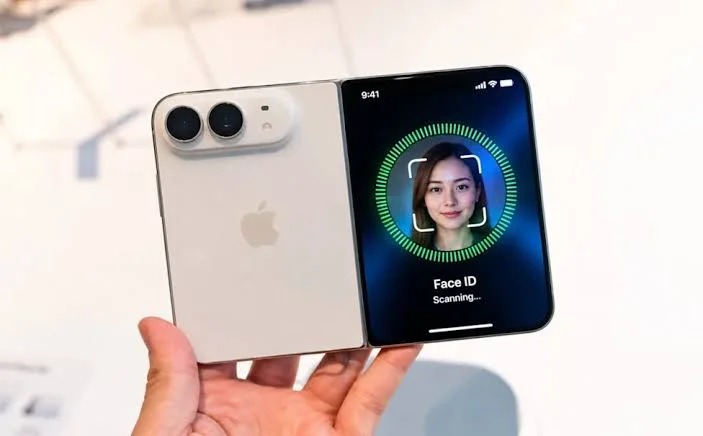
Apple is reportedly working on bringing Face ID to its next-generation foldable smartphone, the iPhone Duo 2. According to recent reports citing Bloomberg’s Mark Gurman, Apple has already developed prototype devices featuring Face ID technology. Engineers are now working to integrate the facial recognition system into the phone’s outer display.
This could be an important upgrade for Apple’s foldable lineup. The first-generation iPhone Duo relies on Touch ID instead of Face ID because of its extremely thin design. However, Apple appears determined to bring back its familiar facial authentication technology in the next model.
Why Face ID Is Difficult to Add to a Foldable iPhone
Adding Face ID to a foldable smartphone is not an easy engineering task. Apple’s facial recognition system requires several components, including an infrared camera, a flood illuminator and a dot projector.
These components work together to scan a user’s face and provide secure authentication. Fitting this hardware inside an ultra-thin foldable body is challenging because the device has limited internal space.
This is one of the main reasons Apple reportedly chose Touch ID for its first foldable iPhone. The fingerprint sensor is integrated into the side power button, making it easier to fit into the slim design.
Apple Is Testing Under-Display Face ID
According to the latest reports, Apple is exploring an under-display solution for Face ID on the iPhone Duo 2. The company has reportedly developed prototypes with facial recognition hardware positioned beneath the outer display.
This approach could help Apple maintain a clean screen design without adding a large visible sensor cutout. However, placing Face ID components under a display requires careful engineering to ensure accurate facial recognition.
Apple has already been exploring ways to reduce the size of its Face ID hardware. These developments could help the company bring more advanced biometric technology to its future foldable devices.
Face ID Could Improve the iPhone Duo 2 Experience
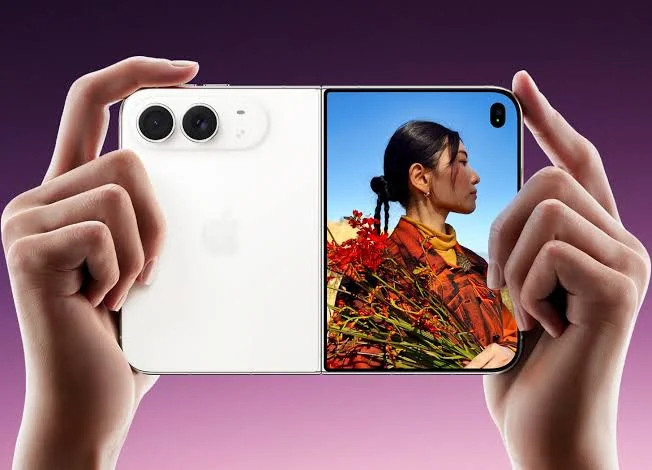
Bringing Face ID to the iPhone Duo 2 could make everyday use more convenient. Users would be able to unlock their phones by simply looking at the screen instead of using a fingerprint sensor.
Face ID is also used for secure activities such as Apple Pay payments, app authentication and password autofill. Adding this feature could make the foldable experience feel closer to Apple’s traditional Pro models.
However, the current reports mainly point towards Face ID integration on the outer display. It is not yet clear whether Apple will bring the same technology to the larger inner folding screen.
Face ID Is Not Guaranteed for the Final Device
Although Apple has reportedly tested iPhone Duo 2 prototypes with Face ID, this does not mean the feature is confirmed for the final product.
According to the latest reports, engineers are still working on integrating the technology into the outer display. The development timeline is also tight, which means the feature could miss the planned launch.
If Apple cannot complete the development in time, the company may delay the upgrade until a future generation, potentially the iPhone Duo 3.
Apple has not officially confirmed these reports or announced the specifications of its next-generation foldable iPhone.
What to Expect From Apple’s Foldable Future
Face ID could become one of the most important upgrades for Apple’s future foldable smartphones. The company wants to combine a slim folding design with the familiar features that iPhone users already expect.
Apart from Face ID, Apple is reportedly exploring other improvements, including an Action button, a telephoto camera and a thinner, lighter body for future models.
For now, Face ID remains a work in progress. If Apple successfully integrates the technology into the iPhone Duo 2, it could make the next foldable iPhone more convenient and familiar for existing iPhone users.
Also Read This
- MG Windsor EV Price Hike: Car Ab ₹15,000 Tak Mehengi, Kya Ab Bhi Hai Worth Buying?
- Maruti Alto K10 vs S-Presso: Which Budget Car Is Better?
- Microsoft Surface Laptop 13 vs MacBook Air: Which Laptop Is Better?
- Apple Overtakes Nvidia as the World’s Most Valuable Company: What Changed?
- MG Windsor EV Pro Long Drive Review: Real-World Range and Comfort