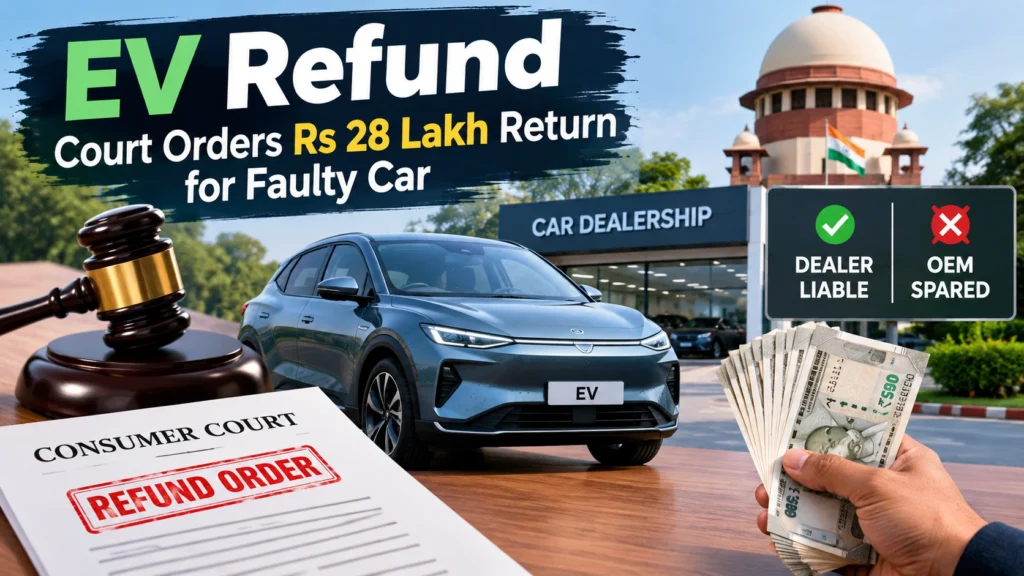
EV Refund: Buying a brand-new electric vehicle should be an exciting milestone. Instead, one Indian EV owner ended up fighting a long legal battle after repeated technical problems turned a premium purchase into a frustrating experience.
In a significant consumer court ruling, a local car dealership has been directed to refund the full Rs 28 lakh paid for a defective electric vehicle. However, the original equipment manufacturer (OEM) was not held liable in this particular case.
The judgment highlights an important lesson for every car buyer: keeping proper records and understanding who is legally responsible can make a major difference when a vehicle develops persistent faults.
What Happened in the Case?
The customer purchased a new electric vehicle worth around Rs 28 lakh, expecting reliable performance and hassle-free ownership.
Soon after delivery, the EV reportedly began experiencing recurring technical issues. Despite several visits to the dealership’s service center, the problems continued without a permanent solution.
After repeated repair attempts failed to resolve the defects, the buyer filed a complaint against both the dealership and the manufacturer under consumer protection laws.
The consumer court later examined the evidence, including the service history and the dealership’s handling of the complaint, before delivering its verdict.
EV Refund: click here
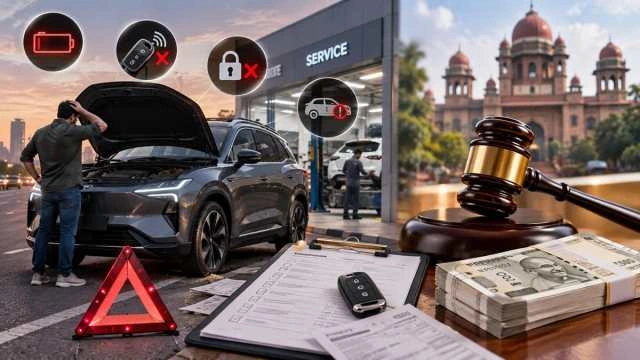
Why Did the Court Hold the Dealer Responsible?
The court concluded that the dealership failed in its responsibility to provide a satisfactory solution after delivering the faulty vehicle.
Key reasons behind the decision include:
- The dealership supplied a vehicle that continued to suffer from recurring defects.
- Multiple repair attempts did not permanently fix the problems.
- The customer was left without an effective resolution despite repeated complaints.
- The dealer was directed to refund the entire purchase amount of Rs 28 lakh.
This ruling reinforces that dealerships are not only responsible for selling vehicles but also for providing proper after-sales support when serious issues arise.
Why Was the OEM Not Held Liable?
One of the most talked-about parts of the judgment is that the original equipment manufacturer (OEM) was not held directly responsible.
According to the court’s findings, the evidence in this case pointed primarily toward the dealership’s handling of the vehicle, including service-related failures and issues connected to its responsibilities after delivery.
That does not mean manufacturers are always exempt from liability. Consumer courts can hold manufacturers responsible in other cases when evidence directly links them to the defect or warranty failures. The outcome depends on the facts and evidence presented in each case.
Why This Case Matters for EV Buyers
India’s electric vehicle market is growing rapidly, with more buyers choosing EVs for lower running costs and cleaner transportation.
As EVs become more advanced, they also rely heavily on software, battery management systems, and electronic components. When problems appear repeatedly, documenting every interaction becomes extremely important.
This case serves as a reminder that consumers have legal options when a high-value purchase repeatedly fails to perform as promised.
Practical Tips for EV Buyers
Keep Every Service Record
Save job cards, invoices, emails, WhatsApp messages, and SMS updates related to repairs. These documents can become valuable evidence if the dispute reaches consumer court.
Report Problems in Writing
Instead of relying only on verbal conversations, submit complaints through email or written applications so there is a clear record.
Don’t Accept Endless Temporary Fixes
If the same issue keeps returning after multiple repairs, formally escalate the matter instead of waiting indefinitely.
Understand Dealer and Manufacturer Responsibilities
Depending on the circumstances, responsibility may fall on the dealership, the manufacturer, or both. Proper documentation helps establish who failed to meet their obligations.
What This Means for India’s EV Industry
Consumer confidence plays a major role in the growth of electric vehicles.
Cases like this encourage dealerships to improve pre-delivery inspections, customer service, and complaint handling. At the same time, they remind buyers that consumer protection laws exist to address serious product-related disputes when evidence supports their claims.
As EV adoption continues to increase, accountability across the sales and service network will become even more important for maintaining trust in the market.
Final Thoughts
The consumer court’s decision to order a Rs 28 lakh refund sends a strong message that dealerships can be held accountable when they fail to resolve serious vehicle defects. While the OEM was spared in this particular case, the ruling shows that every dispute depends on the evidence presented.
For anyone planning to buy an electric vehicle, the biggest takeaway is simple: keep every document, report recurring issues promptly, and know your consumer rights. A well-maintained paper trail can become your strongest protection if a dream purchase turns into an unexpected legal battle.
Also Read This
- iPhone 18 Pro Max vs Galaxy S26 Ultra: 2026 ke Sabse Bade Flagship Phones ka Ultimate Comparison
- Honor Magic 9 aur Super Edition Leaked Live Images: Sky Blue aur Yellow Colors ne Jeeta Dil
- Rs 17 Lakh 7-Seater Gets Cheaper: Mahindra Marazzo Par Bumper Discount, Deal Ki Puri Haqikat
- Google Search Console June Data Missing? Sach Kya Hai Aur Iska Solution Kya Hai
- Physical AI Kya Hai? Chatbot Se Robot Tak AI Ka Agla Bada Kadam