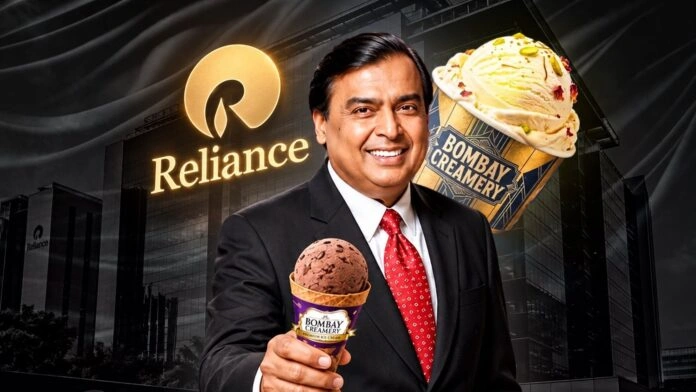
Reliance has entered another mass-market business, and this time it is targeting India’s fast-growing ice cream industry. Through Reliance Consumer Products Limited (RCPL), the company has launched Bombay Creamery, with products starting at just ₹10.
At first, the affordable price grabs everyone’s attention. However, industry experts believe the bigger story is not the ₹10 ice cream. Instead, it is the massive cold-chain network that Reliance is quietly building behind the scenes.
If this strategy succeeds, Bombay Creamery could become much more than a new ice cream brand. It could also help Reliance expand into frozen foods and other temperature-sensitive products in the future.
Reliance Consumer Products Official:
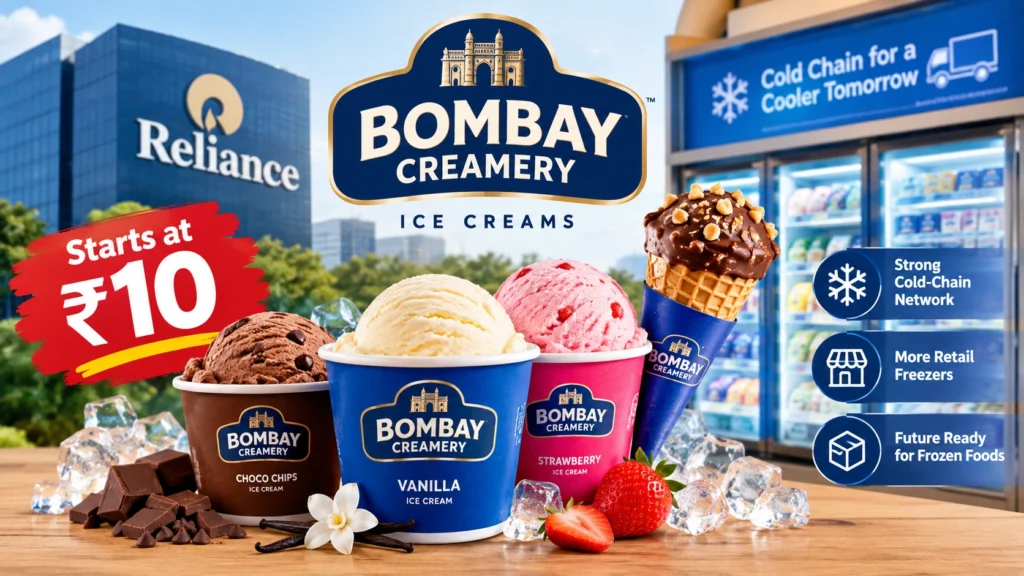
Why the ₹10 Price Matters
India’s ice cream market depends heavily on impulse purchases. Many customers decide what to buy only after reaching a shop. Therefore, affordable pricing can quickly attract first-time buyers.
By launching Reliance Ice Cream products at ₹10, Bombay Creamery is targeting students, families, and everyday consumers looking for budget-friendly treats.
This approach is familiar. Reliance followed a similar strategy with Campa Cola, where competitive pricing helped the brand gain attention against established beverage companies. Now, the company is testing the same playbook in the frozen dessert market.
Established Brands May Face New Competition
India’s ice cream industry already has several trusted brands. Companies such as Amul, Vadilal, Mother Dairy, and Kwality Wall’s have built strong customer loyalty over many years.
A ₹10 entry point alone may not change buying habits overnight. However, it can encourage millions of consumers to try Bombay Creamery for the first time.
As a result, established brands may need to strengthen promotional offers, improve retail visibility, or introduce more affordable options to protect their market share.
The Bigger Story Is Reliance’s Cold-Chain Network
The most important part of this launch is not the ice cream itself. It is the infrastructure required to keep frozen products at the right temperature.
Unlike bottled beverages, ice cream must remain close to -18°C from the factory to the retail freezer. Even a short break in temperature control can affect product quality.
Building this kind of network requires:
- Refrigerated transportation
- Thousands of dedicated retail freezers
- Reliable electricity and maintenance
- Strong logistics management
This makes the business much more complex than selling soft drinks.
Why This Infrastructure Could Become a Long-Term Advantage
Reliance already has a wide retail presence through its grocery and consumer products network. That existing reach gives the company an opportunity to place more freezers in local stores and improve product availability.
Industry observers believe that once this cold-chain network grows, Reliance can use it for much more than ice cream. The same infrastructure could support frozen vegetables, ready-to-cook meals, frozen snacks, and other products that require controlled temperatures.
In other words, today’s ice cream launch could help create tomorrow’s larger frozen food business.
Can Reliance Win in a Regional Market?
Despite Reliance’s strong retail presence, India’s ice cream market remains highly fragmented. Regional brands enjoy deep customer trust in different parts of the country.
For example:
- Western India has several well-established local brands.
- Southern India is strongly associated with Arun Icecreams.
- Northern India has players like Creambell with loyal customer bases.
Because of this, success will depend on more than low prices. Consumers who enjoy the taste are more likely to become repeat buyers, while consistent supply will determine whether stores continue stocking the brand.
Consumer Taste Will Decide the Future
Launching at ₹10 can generate curiosity, but repeat purchases depend on product quality.
If Bombay Creamery delivers good taste, smooth texture, and consistent availability, it could gradually build customer loyalty. However, if quality does not meet expectations, even aggressive pricing may not create long-term success.
This balance between affordability and product experience will shape the brand’s future in India’s competitive ice cream market.
What This Means for India’s FMCG Industry
Reliance’s expansion into ice cream also highlights a larger trend in India’s consumer goods sector. Companies are no longer competing only through advertising. Instead, they are investing heavily in distribution, logistics, and retail infrastructure.
By strengthening its cold-chain capabilities today, Reliance may create advantages across multiple product categories in the future. That makes Bombay Creamery an important launch, even beyond the dessert aisle.
The Bottom Line
Reliance’s entry into the ice cream business is about much more than a ₹10 scoop.
While affordable pricing is expected to attract first-time buyers, the company’s larger investment appears to be in building a powerful cold-chain network. If executed well, that infrastructure could support future expansion into frozen foods and other temperature-sensitive products.
For now, established brands still hold strong consumer loyalty. Yet Bombay Creamery has introduced a new competitive challenge that could reshape India’s frozen food market over the coming years.
Also Read This
- Tata Avinya X and Next-Gen Tata Nexon: Everything We Know About Tata’s Big 2027 Plans
- Mumbai Man Sells Bitcoin for Rs 1.24 Crore: Why ITAT Quashed the Tax Demand
- Xiaomi 18 Pro Real-Life Images Surface: Why the New Flush Camera Design Changes Everything
- Redmi Note 17 Pro vs OnePlus Nord CE 6 Comparison: Which Phone Offers More Under Rs. 40,000?
- iOS 27 Lets You Watch YouTube on Apple CarPlay: How It Works