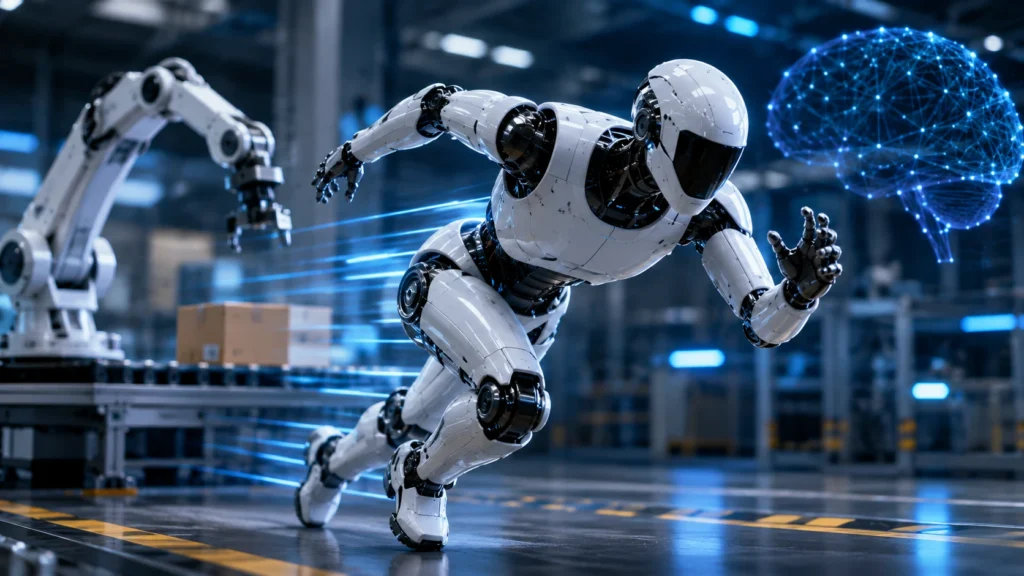
Robots No Longer Need to Overthink Every Move
VLASH AI: What if a robot could react almost instantly instead of spending precious milliseconds calculating every tiny movement? That idea is becoming much closer to reality.
Researchers from MIT, NVIDIA, and UC Berkeley have developed a low-latency AI approach that allows robots to respond much faster than before. Instead of performing heavy calculations for every single frame they see, robots can now predict their next action more efficiently. As a result, reaction time can improve by around 2x in many robotic tasks.
This breakthrough could make warehouse robots faster, self-driving vehicles safer, and humanoid robots much more natural in their movements.
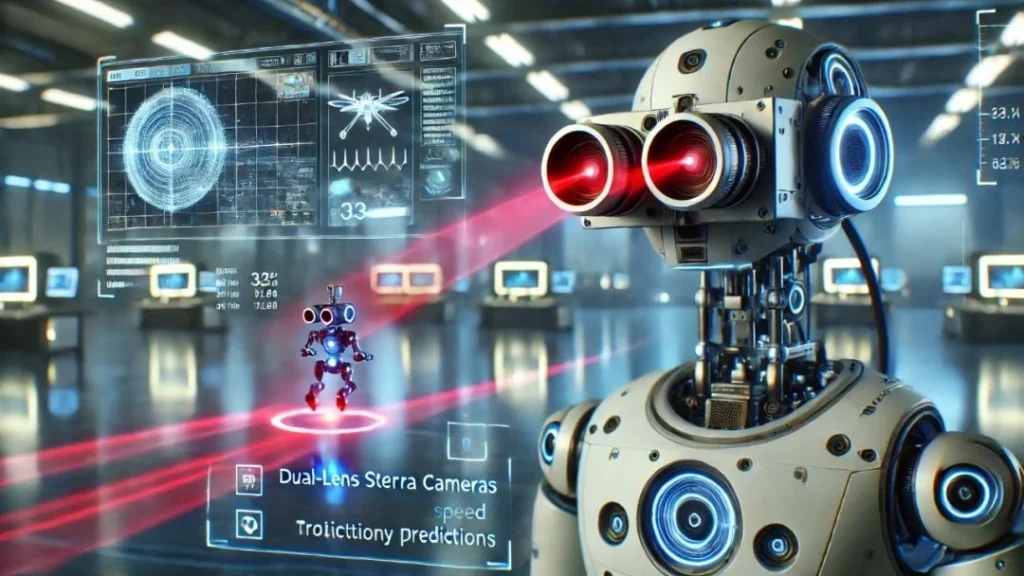
Why Were Robots Slow Before?
Modern robots are incredibly intelligent, but they often suffer from one major problem: reaction latency.
Every time a robot performs a simple task, it usually follows three steps:
- Observe the environment using cameras and sensors.
- Process large amounts of data.
- Calculate the safest movement before sending commands to its motors.
Although this process happens within milliseconds, those tiny delays matter a lot in fast-moving situations. For example, catching a falling object or avoiding an unexpected obstacle requires extremely quick reactions.
The biggest issue is that robots often perform unnecessary calculations repeatedly, even when the environment has barely changed.
What Is VLASH AI?
The name VLASH AI is being used online to describe a new low-latency robotics approach inspired by research from MIT, NVIDIA, and UC Berkeley.
The core idea is surprisingly simple.
Instead of making robots “think from scratch” every moment, AI helps them predict what will happen next using previous visual information and learned behavior.
In other words, the robot spends less time calculating and more time acting.
How Does the Technology Work?
Rather than rebuilding an entire understanding of the world every frame, the system focuses on making faster decisions through smarter prediction.
Predictive Movement
The AI studies previous visual frames and estimates what the next movement should be.
For example, if a ball is already moving toward the robot, the system predicts its path instead of recalculating every detail repeatedly.
Reduced Computational Load
Since the robot processes fewer unnecessary calculations, its processor has more resources available for important decisions.
This directly reduces response time.
Smoother Motion
Another advantage is that robot movements become much more natural.
Instead of stopping and restarting after every calculation, movements flow continuously, similar to how experienced athletes rely on muscle memory.
Why Is a 2x Speed Improvement Important?
At first glance, doubling reaction speed may not sound revolutionary.
However, in robotics, even a few milliseconds can completely change performance.
For example:
- A warehouse robot can grab moving packages more accurately.
- A delivery robot can avoid obstacles more quickly.
- A humanoid robot can maintain balance better after slipping.
Faster reactions also reduce wasted energy because robots spend less time correcting mistakes.
Real-World Applications
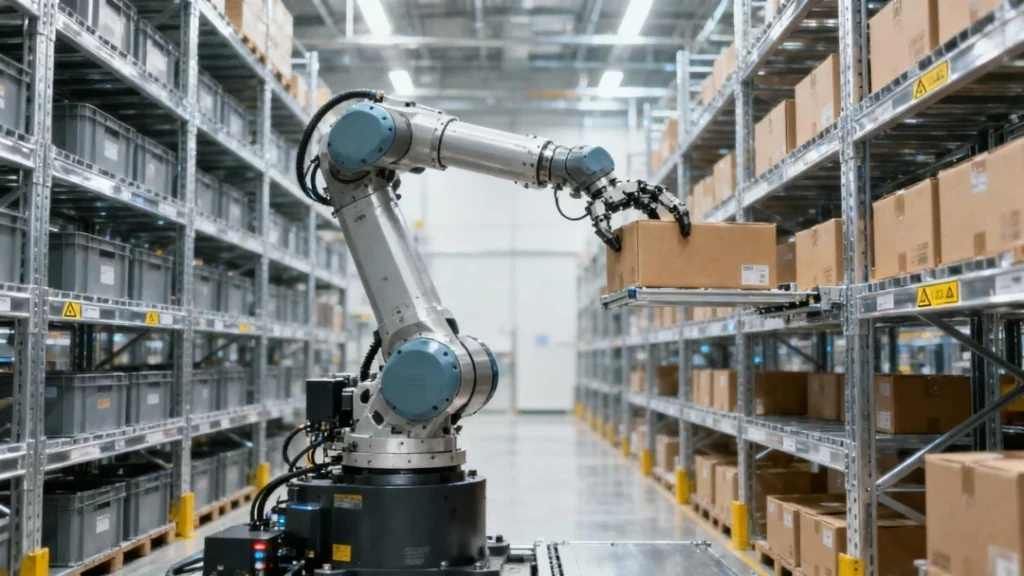
1. Smarter Warehouse Robots
Companies such as Amazon rely heavily on robotic automation.
With lower reaction latency, robots can:
- Sort packages faster.
- Avoid collisions.
- Improve overall warehouse efficiency.
This could shorten delivery times while reducing operational costs.
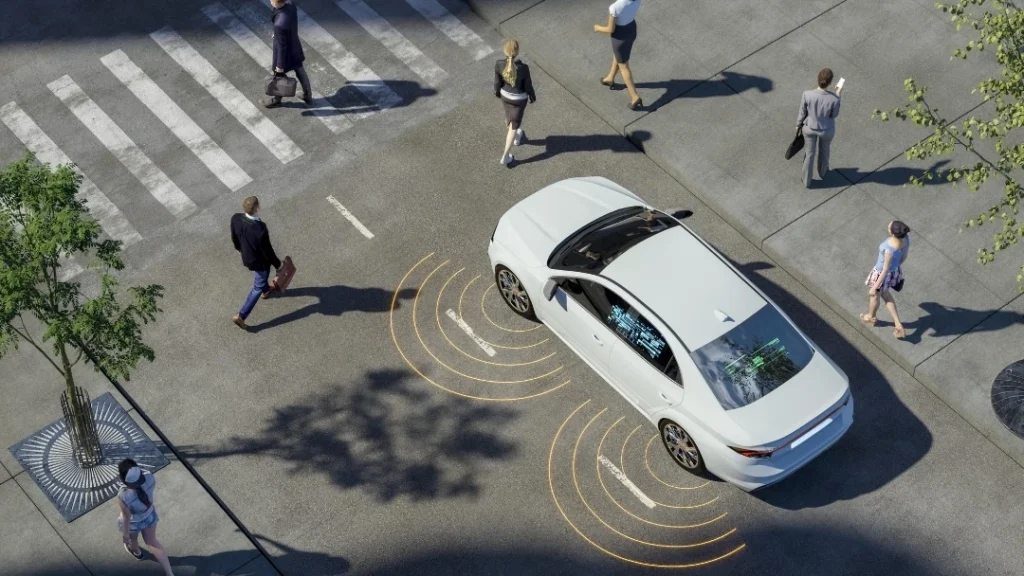
2. Safer Self-Driving Cars
Autonomous vehicles constantly analyze their surroundings.
A faster AI response means vehicles can:
- Detect sudden obstacles sooner.
- React more quickly during emergencies.
- Improve passenger safety.
While self-driving systems still require extensive testing, reducing latency is an important step forward.
3. Better Humanoid Robots
Humanoid robots need to work safely around people.
Faster reactions help them:
- Catch objects.
- Maintain balance.
- Handle tools more naturally.
- Work alongside humans more safely.
This makes them more useful in homes, hospitals, and factories.
also see
- AI-Powered Dark Energy Research: How Supernova Images Are Helping Scientists Measure the Expanding Universe
- TVS iQube MillionR Special Edition Launched at Rs 1.40 Lakh: What’s New?
- Vivo V80 Lite 5G Launched: 120Hz AMOLED Display, 50MP Camera and Fast Charging
Why Software Matters More Than Bigger Hardware
One of the biggest lessons from this research is that faster robots do not always need more powerful hardware.
Instead, smarter software can unlock better performance from existing systems.
This shift is important because:
- Hardware upgrades are expensive.
- Efficient software can improve speed without increasing energy consumption.
- Better algorithms make robots more scalable.
In many cases, optimizing AI is a more practical solution than simply installing faster processors.
Could This Change the Future of Robotics?
The robotics industry is moving toward machines that can react almost as naturally as humans.
Future improvements may include:
- Faster home assistant robots.
- More capable industrial robots.
- Better disaster-response robots.
- Improved healthcare robots.
As AI prediction becomes more accurate, robots may become both faster and safer in real-world environments.
Are Jobs at Risk?
This question naturally comes up whenever robotics improves.
The answer is not completely straightforward.
Some repetitive tasks may become increasingly automated. However, new jobs related to robot maintenance, AI development, safety monitoring, and system design are also expected to grow.
Historically, automation has often changed the nature of work rather than eliminating every job entirely.
The long-term impact will depend on how businesses, governments, and workers adapt to these technologies.
Conclusion
The latest low-latency robotics research from MIT, NVIDIA, and UC Berkeley shows that the future of robotics is not only about building stronger machines. It is also about building smarter AI systems that eliminate unnecessary thinking and enable faster action.
By reducing computational overhead and predicting movements more efficiently, robots can achieve reaction speeds that are up to 2x faster in many scenarios.
As this technology continues to develop, we may soon see robots that move with smoother reflexes, respond more naturally, and perform complex tasks with greater confidence.
The future of robotics may not belong to machines that think harder, but to those that think smarter.
Also See This
LASK Complete Stunning Comeback to Beat Celtic 5-1 and Reach Champions League
Tata Tiago.ev Range Dropping? These Two Hidden Culprits Could Be the Real Reason
iPhone 18 Pro, Vivo X500 Series and More: 5 Biggest Smartphones Expected to Launch in September 2026
- MIT News: CLICK HERE
- NVIDIA Research: CLICK HERE
- UC Berkeley: CLICK HERE
VLASH AI