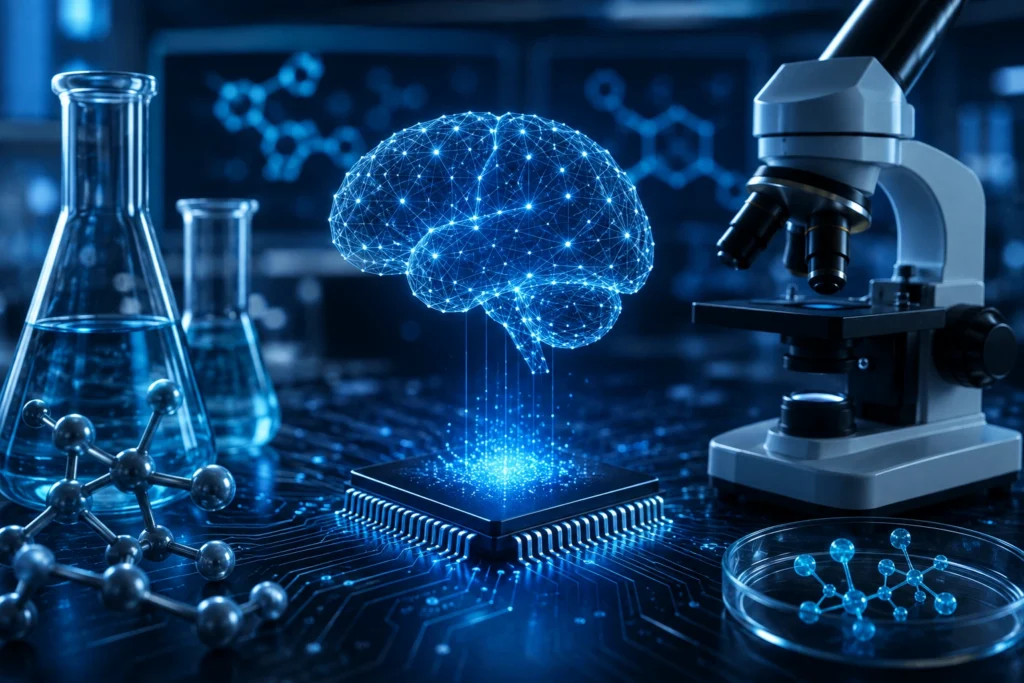
AI Co-Scientist: Artificial Intelligence is changing almost every industry, but one of its biggest transformations is happening inside scientific laboratories. Today, the conversation is no longer about whether AI can help researchers. Instead, the real question is whether AI is replacing scientists or becoming their most powerful research partner.
The answer is more interesting than many people expect. Modern AI systems, especially AI Co-Scientists and Agentic AI, are helping researchers discover new medicines, analyze massive datasets, and speed up experiments. However, human scientists still play the most important role in creativity, critical thinking, and ethical decision-making.
Let’s explore how AI is reshaping scientific research and what the future may look like.
Google DeepMind Science | Official Research
What Is an AI Co-Scientist?
An AI Co-Scientist is an advanced AI system designed to assist researchers throughout the scientific discovery process. Unlike traditional AI that simply answers questions or processes information, these systems can help generate hypotheses, review research papers, suggest experiments, and analyze complex scientific results.
Some modern AI systems can even work through multiple research steps before asking for human feedback. However, they still require scientists to verify results and make final decisions.

How Agentic AI Is Changing Scientific Research
Agentic AI goes beyond ordinary automation. Instead of performing one task at a time, it can plan, execute, evaluate results, and adjust its next steps toward a specific research goal.
This technology is already making a noticeable impact across several scientific fields.
1. Faster Drug Discovery
Developing a new medicine traditionally takes years and costs billions of dollars. Today, AI can virtually screen millions of molecular structures within hours, helping researchers identify the most promising drug candidates much faster.
Instead of replacing laboratory testing, AI helps scientists focus on the molecules most likely to succeed.
2. Smarter Molecular Discovery
Researchers use AI to predict how different molecules may interact with proteins or diseases before conducting expensive physical experiments.
As a result, scientists save valuable time while improving research efficiency.
3. Automated Laboratories
Modern robotic laboratories combine AI with automated equipment. In some research environments, AI helps design experiments, monitors results, and recommends the next experiment based on previous outcomes.
Even then, human researchers supervise the process and validate important discoveries.
Is AI Replacing Scientists?
This is one of the biggest concerns in the research community. However, current evidence suggests that AI is not replacing scientists. Instead, it is making them significantly more productive.
Scientific research involves creativity, intuition, ethical judgment, and deep understanding of complex problems. These human abilities remain essential.
How AI Helps Scientists
AI can quickly handle repetitive tasks that previously consumed weeks of work.
For example, it can:
- Analyze enormous datasets within minutes.
- Summarize thousands of research papers.
- Perform routine calculations.
- Identify hidden patterns in scientific data.
Because of this support, researchers can spend more time developing new theories, designing innovative experiments, and solving difficult scientific challenges.
also see
- AI World Models: Is AI Creating a Digital Simulation of Our World?
- Toyota Innova Hycross Facelift Design Patent Revealed: Here’s What Could Change
- Apple M5 Ultra and M6 Chips: Everything You Need to Know About Apple’s Next Performance Leap

The Biggest Challenges of AI in Science
Although AI offers impressive advantages, it also comes with important limitations that scientists cannot ignore.
AI Hallucinations
AI can sometimes generate incorrect information, false references, or misleading conclusions. Therefore, every AI-generated result must be carefully verified before becoming part of scientific research.
The Black Box Problem
Many advanced AI models do not clearly explain how they reached a particular conclusion.
Since science depends on understanding both “how” and “why,” transparency remains a major challenge.
Ethical and Safety Risks
Powerful AI tools could potentially be misused to design harmful chemicals or dangerous biological materials.
For this reason, governments, research institutions, and AI companies continue working on stronger safety guidelines and responsible AI policies.
Real-World Examples of AI-Assisted Research
Several leading research organizations are already using AI to accelerate scientific discovery.
- Google DeepMind’s AlphaFold transformed protein structure prediction.
- AI-powered molecular screening helps pharmaceutical companies identify potential drug candidates.
- Automated laboratories combine robotics with AI to speed up experimental workflows.
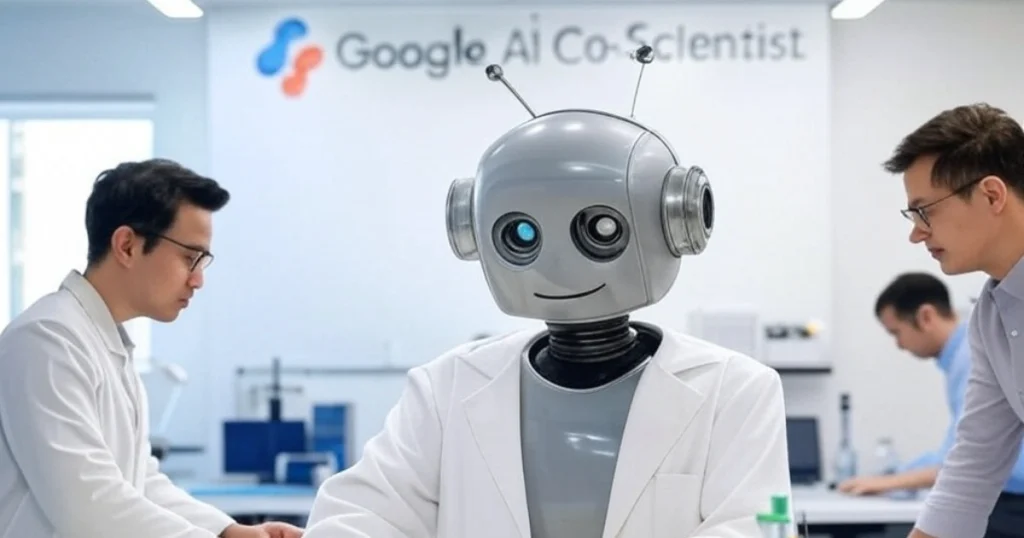
These examples show that AI works best as a collaborative research assistant rather than an independent scientist.
What Does the Future Look Like?
The future of science is unlikely to belong to humans alone or AI alone. Instead, it points toward Human-AI Collaboration.
Scientists who learn to work alongside AI will likely conduct research faster, explore more ideas, and solve larger global challenges. From cancer treatment to climate change research, AI has the potential to become one of the most valuable scientific tools ever created.
In the end, AI is not replacing scientists. It is helping them push the boundaries of discovery further than ever before.
Also Read This
Haier P7 Pro 75-Inch TV Review: A Budget-Friendly Big Screen with Powerful Sound
Lionel Messi 4 Goals vs CF Montreal: Or Hoyos Ne Ye Kya Kahe Diya?
iPhone 16 Price Drop on Flipkart: Can You Really Buy It for Rs 34,817?