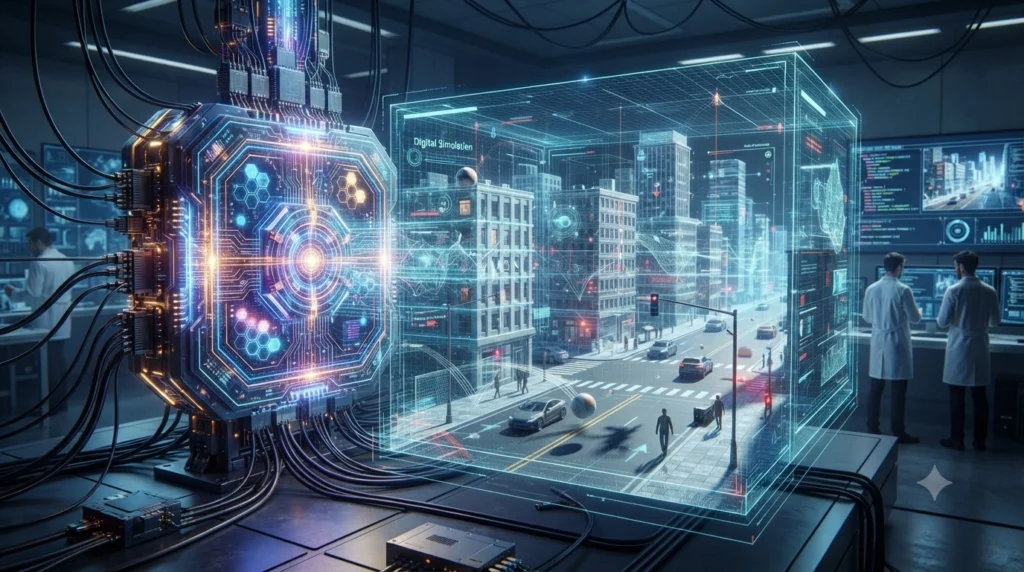
AI World Models: Imagine closing your eyes before crossing a busy road. Somehow, you still expect to hear a car horn, notice the sound of brakes, and know that stopping is the safest choice.
Your brain already carries a mental model of how the world works.
Now imagine if Artificial Intelligence could build a similar understanding.
That is exactly why AI World Models have become one of the most exciting areas in AI research. Instead of simply recognizing images or generating text, these systems try to understand how the real world behaves. They learn physics, predict future events, and create internal simulations that help machines make smarter decisions.
So, is AI really building a digital version of our world? The short answer is yes, and the journey has already begun.
What Are AI World Models?
AI World Models are advanced AI systems that learn how the world behaves rather than only memorizing patterns from data.
Traditional AI can identify objects, answer questions, or generate images. However, World Models go further by predicting what is likely to happen next based on physics, logic, and cause-and-effect relationships.
For example:
- A regular AI identifies a cat sitting on a table.
- A World Model understands that if the cat jumps, it will land on the floor, create movement, and possibly knock nearby objects over.
In other words, the AI builds an internal virtual representation of reality. This allows it to imagine future outcomes before taking action.
How Are World Models Different from Traditional AI?
The biggest difference is that traditional AI reacts to information, while World Models try to understand how the environment changes over time.
| Traditional AI | AI World Models |
|---|---|
| Recognizes patterns | Understands cause and effect |
| Answers based on existing data | Predicts future outcomes |
| Identifies objects | Simulates real-world behavior |
| Works mostly in the present | Plans several steps ahead |
This ability makes World Models especially valuable for robots, self-driving vehicles, and AI agents that must operate in dynamic environments.
Is AI Really Creating a Digital Simulation of the World?
Yes, although the technology is still developing.
Leading research organizations such as Google DeepMind, Meta, and OpenAI are building systems that learn from massive amounts of real-world videos and interactions. Instead of memorizing every possible situation, these models learn the rules that govern the physical world.
As a result, AI can estimate what may happen next without experiencing every situation in reality.
How Tesla Uses World Model Concepts
One of the most practical examples appears in self-driving technology.
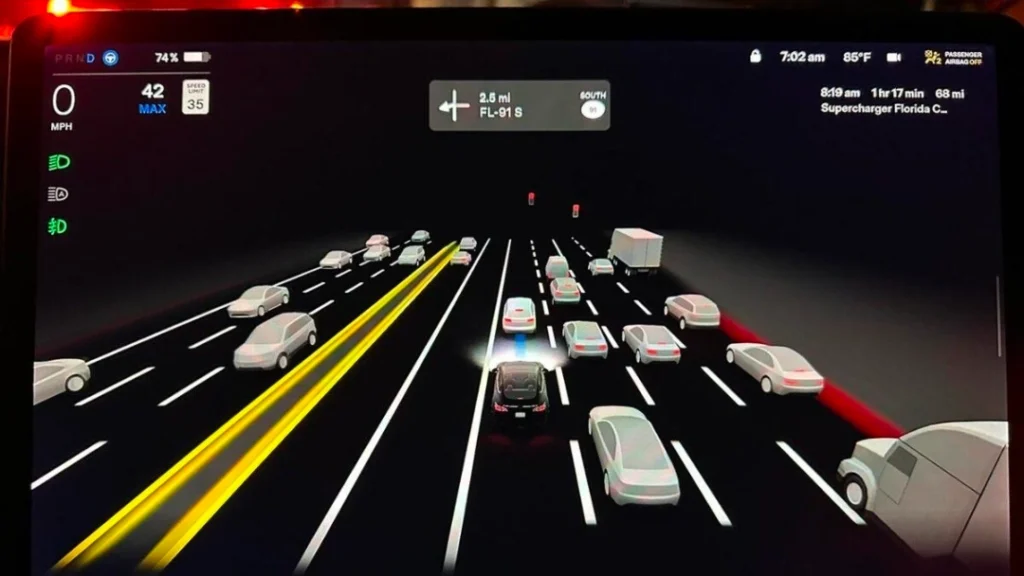
Tesla’s autonomous driving system does not simply detect cars, bicycles, or pedestrians. Instead, it creates a constantly updating 3D understanding of the surroundings.
For instance, if a scooter suddenly changes direction, the system predicts possible movements before they happen. That prediction helps the vehicle react faster and more safely.
Although Tesla’s approach combines multiple AI techniques, predictive world understanding plays an important role in modern autonomous driving research.
Why Robots Need World Models
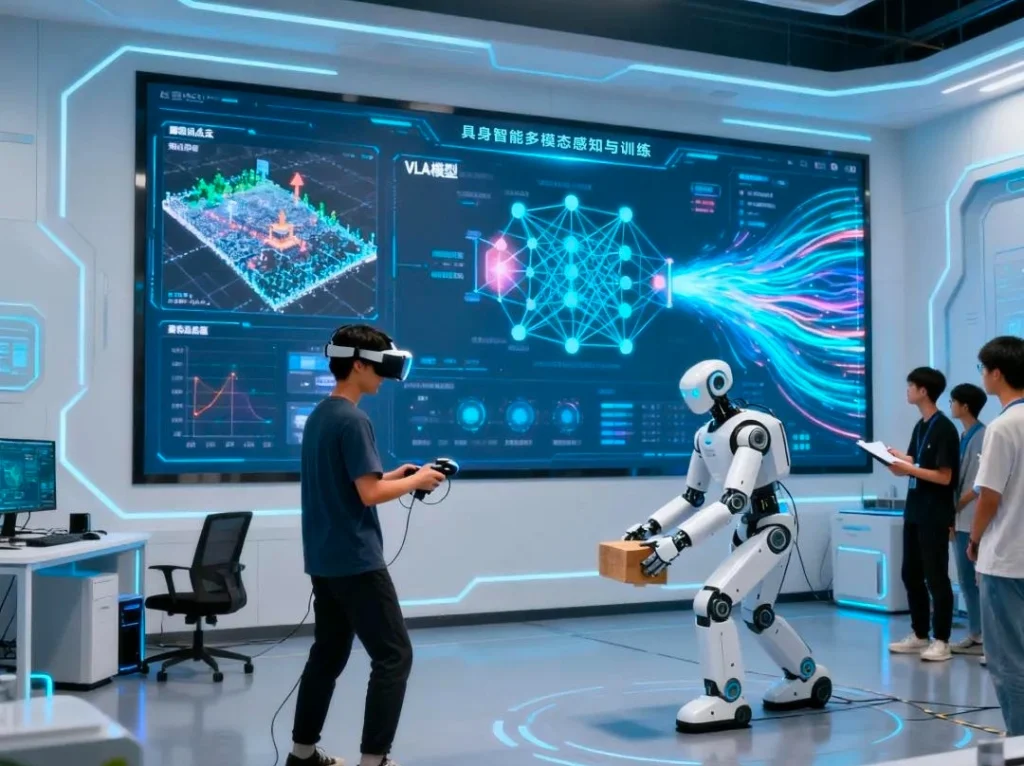
Teaching robots directly in the real world is expensive and risky.
A robot may fall thousands of times while learning to walk. It could also damage equipment during training.
Instead, researchers train robots inside virtual environments where they can practice millions of actions safely. Once they learn how balance, movement, and objects behave, they transfer those skills to the real world.
This approach saves both time and money while improving safety.
Why AI World Models Matter
The impact of this technology goes far beyond research laboratories.
Smarter Home Robots
Future robots could understand that dropping a glass may break it, so they would naturally handle fragile objects more carefully.
Better Self-Driving Cars
Vehicles would predict dangerous situations earlier instead of reacting at the last moment.
More Realistic Video Games
Game characters could make decisions based on realistic physics instead of following fixed scripts written by developers.
Powerful AI Agents
Next-generation AI assistants may plan multiple steps ahead when completing tasks, making them more useful in both digital and real-world environments.
The Technology Behind World Models
Although researchers use different approaches, many World Models share several important capabilities.
- They learn from videos and real-world experiences.
- They predict future frames instead of only analyzing current ones.
- They build compressed internal representations of environments.
- They simulate actions before choosing the best response.
These abilities make AI more efficient because it can “think ahead” without testing every action in reality.
also see
- LASK Complete Stunning Comeback to Beat Celtic 5-1 and Reach Champions League
- Tata Tiago.ev Range Dropping? These Two Hidden Culprits Could Be the Real Reason
- iPhone 18 Pro, Vivo X500 Series and More: 5 Biggest Smartphones Expected to Launch in September 2026
Are There Any Risks?
Like every powerful technology, World Models also raise important concerns.
More Convincing Deepfakes
As simulations become increasingly realistic, fake videos and synthetic environments could become much harder to detect.
Privacy Challenges
Training these systems requires enormous amounts of real-world data, which raises questions about how that data is collected and used.
Ethical Decisions
When AI begins making predictions that affect transportation, healthcare, or public safety, developers must ensure those decisions remain fair, transparent, and accountable.
For these reasons, researchers continue working on safety standards alongside technological progress.

What Could Happen in the Next Five Years?
Experts expect rapid improvements in World Model technology.
We may see:
- More capable household robots.
- Safer autonomous vehicles.
- AI assistants that plan complex tasks more effectively.
- Faster virtual simulation for scientific research and engineering.
- More realistic virtual reality experiences.
While AI is not yet creating a perfect digital copy of Earth, it is becoming much better at understanding how the physical world behaves.
Frequently Asked Questions (FAQs)
What is an AI World Model?
An AI World Model is an AI system that learns how the real world behaves by understanding physics, cause-and-effect relationships, and future predictions.
How is it different from ChatGPT?
ChatGPT primarily generates and understands text, while World Models focus on predicting how environments and objects change over time.
Does Tesla use World Models?
Tesla’s autonomous driving system uses predictive environmental understanding and 3D scene modeling, which are closely related to World Model concepts.
Are World Models already being used?
Yes. Researchers and companies are already using similar techniques in robotics, autonomous driving, and AI research.
Can AI create a perfect digital copy of Earth?
Not yet. However, AI is steadily improving its ability to simulate real-world behavior with increasing accuracy.
Conclusion
AI World Models represent one of the biggest shifts in Artificial Intelligence.
Instead of simply recognizing images or generating text, these systems are learning how space, time, movement, and physics interact. That makes them far more useful for robots, autonomous vehicles, and future AI assistants.
The question is no longer whether AI can understand the world. The real question is how close it will come to building a realistic digital simulation of reality.
The progress has already started, and the next few years could redefine how humans and intelligent machines interact.
What do you think? Will AI eventually build a perfect digital twin of our world? Share your thoughts in the comments below.
Also See This
VLASH AI: How MIT, NVIDIA, and UC Berkeley Made Robots React Up to 2x Faster
Bilibili Go Global: Can This Unique Platform Really Challenge YouTube?
Apple Prepares for iPhone Price Hike as Memory Costs Surge: What You Need to Know
OpenAI: CLICK HERE
Google DeepMind: CLICK HERE
Meta AI: CLICK HERE
Tesla AI: CLICK HERE