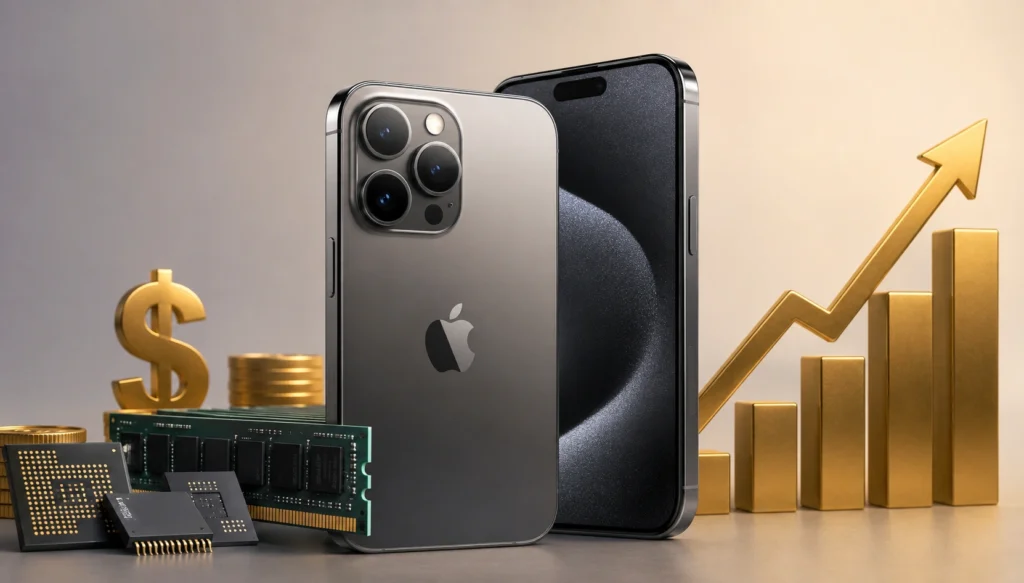
Apple iPhone Price Hike: Planning to buy a new iPhone? Rising memory chip costs could make upcoming iPhone models more expensive. Here’s everything you need to know.
Why Apple May Increase iPhone Prices
Apple could raise prices for some upcoming iPhone models as memory component costs continue to rise. Industry reports suggest that expensive NAND flash storage and DRAM chips are increasing production costs across the smartphone industry.
Although Apple has not officially confirmed a price hike, analysts believe that higher manufacturing costs could affect future iPhone pricing, especially for premium models.
If you are planning an upgrade, understanding these changes can help you make a smarter buying decision.
What Is Causing Memory Costs to Rise?
The biggest reason behind the expected price pressure is the growing demand for memory chips across the technology industry.
AI Is Increasing Demand
Artificial intelligence has become one of the largest buyers of memory hardware. Companies building AI servers and data centers need huge amounts of DRAM and NAND storage, which has pushed prices higher.
As demand continues to grow, memory manufacturers are charging more across multiple industries.
Advanced Storage Costs More
Modern iPhones use faster and more advanced memory technology to deliver better performance. However, these improvements also make production more expensive.
Premium iPhone models with 512GB or 1TB storage require more costly memory modules than lower-storage versions.
Supply Chain Costs Still Matter
Global supply chains have improved compared to previous years, but manufacturers still face higher transportation costs, labor expenses, factory adjustments, and currency fluctuations in several markets.
Together, these factors continue to put pressure on smartphone pricing.

Which iPhone Models Could Become More Expensive?
Apple usually keeps pricing secret until launch day. However, industry analysts believe that some models are more likely to see higher prices.
iPhone Pro and Pro Max
The Pro and Pro Max models are considered the strongest candidates for price increases because they include higher storage options, premium memory components, and advanced hardware features.
These devices rely on more expensive parts, making them more vulnerable to rising manufacturing costs.
Base Models in Some Countries
Even if Apple keeps prices unchanged in the United States, buyers in other countries could still pay more because of exchange rates, import duties, and local taxes.
As a result, international pricing may increase even without a global price hike.
also see
- Vivo V80 Lite 5G Launched: 120Hz AMOLED Display, 50MP Camera and Fast Charging
- LASK Complete Stunning Comeback to Beat Celtic 5-1 and Reach Champions League
- Tata Tiago.ev Range Dropping? These Two Hidden Culprits Could Be the Real Reason
How to Save Money Before Prices Rise
If reports turn out to be accurate, there are several practical ways to reduce the cost of your next iPhone.
Buy Before the Next Launch
Retailers often reduce prices on current-generation iPhones before new models arrive. Buying earlier could help you save a significant amount.
Choose the Right Storage
Many users pay for storage they rarely use. Before upgrading, check your current storage usage carefully.
A lower-storage model combined with iCloud or another cloud backup service may be enough for many people.
Use Trade-In Offers
Apple’s Trade In program and carrier promotions can reduce the final price of a new iPhone.
Trading in your old device often provides better value than waiting for future discounts.

Can Apple Avoid a Price Increase?
Apple has absorbed small cost increases in the past because of its strong supply chain and large purchasing power.
However, if memory prices continue rising, analysts believe Apple may eventually pass part of those costs to customers.
The final decision will depend on component prices, market conditions, regional economic factors, and Apple’s launch strategy.
Final Thoughts
Apple has not officially confirmed an iPhone price increase. Still, rising memory costs are creating real pressure across the smartphone industry.
Premium iPhone models appear most vulnerable, while international buyers could also face higher prices because of taxes and currency changes.
If you already plan to upgrade, watching Apple’s upcoming launch announcements, comparing trade-in offers, and buying current-generation models before inventory clears could help you save money.
Official pricing will become clear when Apple unveils its next iPhone lineup.
Frequently Asked Questions
Will Apple definitely increase iPhone prices?
No. Apple has not officially confirmed a price increase. Current reports are based on analyst expectations and rising component costs.
Why are memory chips becoming more expensive?
Growing demand from AI servers, data centers, and premium smartphones has pushed up DRAM and NAND memory prices.
Which iPhone models are most likely to become expensive?
Industry analysts believe that Pro and Pro Max models with higher storage capacities are the strongest candidates for future price increases.
Should I buy an iPhone now?
If you want a current-generation iPhone, buying before the next launch could help you take advantage of retailer discounts and trade-in offers.
Also See This
iPhone 18 Pro, Vivo X500 Series and More: 5 Biggest Smartphones Expected to Launch in September 2026
VLASH AI: How MIT, NVIDIA, and UC Berkeley Made Robots React Up to 2x Faster
Bilibili Go Global: Can This Unique Platform Really Challenge YouTube?
Samsung Semiconductor CLICK HERE
Apple iPhone Price Hike