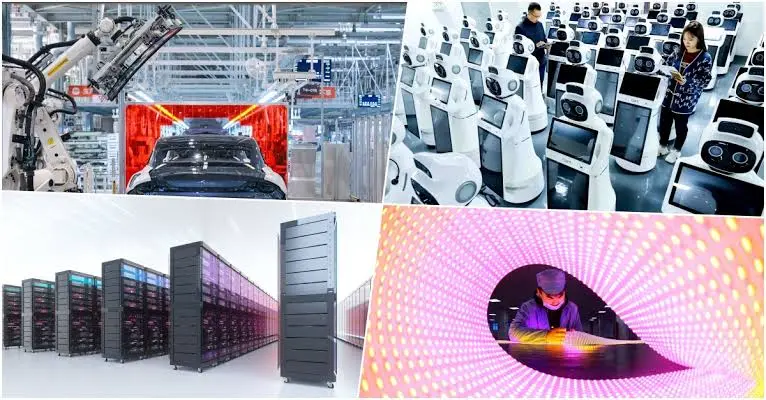
China’s New Quality Productive: China has announced a new policy plan to strengthen its economy through technology, industrial innovation, and high-quality development. On October 9, 2026, the Communist Party of China Central Committee and the State Council issued guidelines outlining 19 key measures to develop what the country calls “New Quality Productive Forces.”
The plan aims to improve China’s technological capabilities, modernise traditional industries, support emerging businesses, and create new sources of economic growth. It also focuses on green development, artificial intelligence (AI), research, and skilled workers.
But what do these measures actually mean? And how could China’s new strategy affect global trade, technology competition, and India’s manufacturing ambitions?
Let’s look at the main points and their possible impact.
What Are China’s New Quality Productive Forces?
China’s New Quality Productive Forces is a development concept that focuses on improving productivity through advanced technology, innovation, and more efficient use of resources.
For many years, China built its economic strength through large-scale manufacturing and exports. It became a major producer of electronics, machinery, textiles, electric vehicles, and many other products.
Now, the country wants to move further up the technology value chain. Instead of relying only on manufacturing volume, China aims to produce more advanced goods, develop important technologies, and improve the efficiency of its industries.
The strategy includes areas such as:
- Artificial intelligence and robotics
- Advanced manufacturing and semiconductors
- Electric vehicles and battery technology
- Renewable energy and green manufacturing
- Biotechnology and aerospace
- Digital infrastructure and industrial software
The main idea is simple: China wants its industries to become more innovative, productive, and competitive.
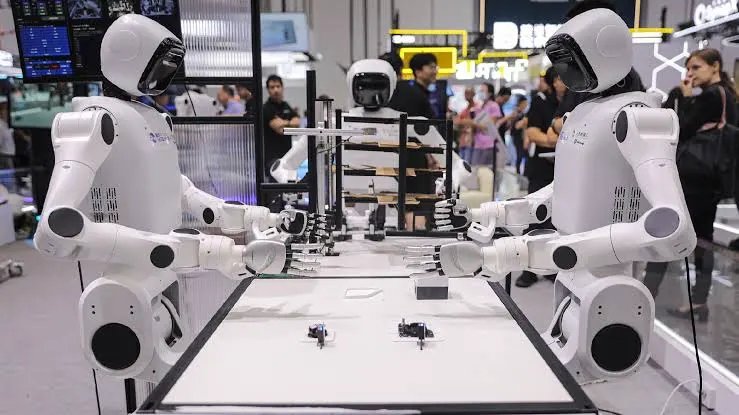
China’s 19 Measures Focus on Five Key Areas
The new guidelines organise 19 measures into five broad areas. These cover scientific research, industrial development, green growth, institutional reforms, and talent development.
1. Strengthening Scientific and Technological Innovation
The first priority is to improve China’s ability to develop important technologies at home.
The guidelines call for stronger basic research, new scientific breakthroughs, and faster progress in key technologies. They also encourage businesses, universities, research institutions, and national laboratories to work more closely together.
Another important goal is to turn research into products that people and businesses can actually use.
For example, a company may develop a promising battery technology in a laboratory. The next challenge is to test it, manufacture it at scale, and bring it to market at a competitive price.
China wants to make this process faster and more effective.
The plan also encourages technology-focused small and medium-sized businesses to play a greater role in research and development.
2. Modernising Traditional Industries
China is not planning to abandon its existing manufacturing base. Instead, it wants to upgrade traditional industries with digital, intelligent, and environmentally friendly technologies.
Industries such as textiles, chemicals, machinery, metals, shipbuilding, and construction could benefit from this approach.
Factories may use automation, connected equipment, data analysis, and AI systems to improve production and reduce waste.
These changes could help companies improve product quality and respond more quickly to market demand.
The guidelines also support the development of emerging industries and the early planning of future industries.
However, China has stressed that new sectors should develop in an orderly way. Local governments and businesses should not rush into the same industry simply because it is attracting attention.
3. Expanding Artificial Intelligence and Digital Technology
Artificial intelligence is an important part of China’s new economic strategy.
The guidelines call for the wider implementation of the country’s “AI Plus” initiative. This approach aims to bring AI into traditional industries and encourage the development of new intelligent products and services.
AI could help manufacturers identify production problems, predict equipment failures, improve logistics, and manage energy consumption.
The wider use of digital technology could also support smarter factories and more connected supply chains.
However, expanding AI also creates challenges. Data protection, system reliability, cybersecurity, and safety need careful attention.
For this reason, the guidelines call for technology monitoring, early risk warnings, and emergency response systems to help ensure that AI remains safe and reliable.
4. Promoting Green Development and Clean Energy
Green development is another major part of the plan.
China wants to strengthen green manufacturing, expand green energy industries, and develop a low-carbon, circular economic system.
The guidelines encourage companies to reduce waste, improve energy efficiency, and use cleaner production methods. They also support policies that promote green investment and environmentally friendly products.
The energy transition is particularly important because modern factories, data centres, electric vehicles, and digital infrastructure all require substantial amounts of energy.
Renewable energy and other low-carbon technologies could help meet this demand while reducing emissions.
However, the results will depend on how effectively these policies are implemented and how quickly businesses can adopt cleaner technologies.
5. Reforming Institutions and Improving Talent Development
Advanced technology alone cannot guarantee economic success. Businesses also need skilled workers, effective regulations, access to finance, and a system that supports innovation.
China’s guidelines therefore call for improvements in market regulation, financial products, technology markets, and the movement of skilled workers between universities, research institutions, and companies.
The plan also seeks to attract advanced resources and encourage international innovation cooperation.
Universities and businesses are expected to play a stronger role in preparing workers for changing industrial needs.
This could become increasingly important as automation and AI change the skills required in manufacturing, engineering, research, and other sectors.
Why Is China Trying to Develop New Growth Drivers?
China’s strategy reflects a broader effort to make economic growth more dependent on innovation and productivity.
Traditional manufacturing remains important, but competition is increasing in several major industries. Companies are under pressure to produce better products, control costs, and adopt new technology.
At the same time, countries around the world are investing in semiconductors, AI, clean energy, and advanced manufacturing.
China wants to strengthen its domestic capabilities in these areas while remaining connected to global markets.
Another challenge is avoiding excessive investment in industries that already have too much production capacity. When many companies expand at the same time, supply can grow faster than demand. This may lead to lower prices, weaker profits, and wasted resources.
The new guidelines warn against blind investment, speculative bubbles, and poorly planned industrial expansion.
This suggests that China wants not only faster innovation but also more disciplined development.
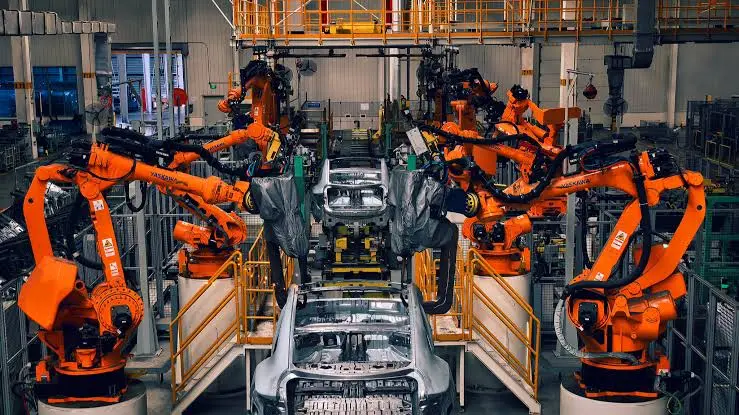
What Could China’s New Measures Mean for the Global Economy?
China is a major participant in international manufacturing and trade. Changes in its industrial policy can therefore influence companies, suppliers, and consumers in other countries.
Stronger Competition in Advanced Technology
If China improves its research capabilities and expands advanced manufacturing, it could become more competitive in areas such as AI applications, electric vehicles, batteries, and industrial automation.
This may encourage companies in other countries to increase their own research spending and improve production efficiency.
For consumers, stronger competition could create more product choices. However, the overall effect will depend on market conditions, trade policies, and the ability of businesses to compete.
Changes in Global Supply Chains
Companies increasingly consider supply chain resilience when deciding where to manufacture products and source components.
China’s push for technological self-reliance could strengthen some domestic supply chains. At the same time, international businesses may continue diversifying production across several countries to reduce risks.
This could create opportunities for economies that can offer reliable infrastructure, skilled workers, competitive costs, and stable business conditions.
More Technology Competition Between China and the United States
Technology has become an important part of the broader economic relationship between China and the United States.
China’s efforts to strengthen domestic capabilities could affect competition in advanced computing, AI, semiconductors, and other strategic industries.
However, the policy announcement alone does not establish how future trade restrictions or international relations will develop. Those outcomes will depend on decisions made by governments and businesses over time.
What Does China’s Strategy Mean for India?
For India, China’s new measures present both a challenge and a potential opportunity.
India has been working to expand domestic manufacturing, improve infrastructure, attract investment, and strengthen its position in global supply chains.
China’s emphasis on advanced technology shows why these efforts need to go beyond increasing production volume.
An Opportunity to Attract Manufacturing Investment
International companies may look at several countries when deciding where to establish factories or source components.
India could benefit if it improves logistics, electricity reliability, workforce training, and the ease of doing business.
Electronics, automotive components, electric vehicles, renewable energy equipment, and other technology-related industries could offer opportunities for further development.
However, companies will compare actual costs, supplier networks, product quality, and delivery times before making investment decisions.
The Need for More Research and Development
India can also learn from the importance China places on connecting scientific research with industrial production.
Universities, research institutions, startups, and established companies need stronger links so that new ideas can become commercially useful products.
Government support can help, but long-term progress also depends on private investment, skilled researchers, reliable infrastructure, and effective implementation.
India’s production-linked incentive schemes and Make in India initiative provide part of the policy framework for expanding manufacturing. Continued improvements in technology and productivity will be important for strengthening that effort.
Competition Will Remain a Major Challenge
China already has extensive manufacturing networks and a large industrial base. Competing with it will require more than lower labour costs.
Indian companies will need to improve product quality, invest in automation, build reliable supplier networks, and develop specialised technical skills.
India does not need to copy China’s entire economic model. Instead, it can focus on areas where it has strong potential and build competitive industries over time.
What Challenges Could China Face?
Despite its ambitions, China’s plan will not guarantee immediate economic success.
Developing advanced technology requires sustained investment, skilled workers, effective research, and access to markets. Some projects may take years to deliver commercial results.
There is also a risk of overcapacity if companies and local governments invest too heavily in the same industries.
Rapid automation may change employment needs, while tighter competition could put pressure on less efficient businesses.
Environmental goals will also require practical implementation. Expanding clean energy and improving factory efficiency can take significant investment and careful planning.
China’s ability to balance technological ambition with market demand, financial discipline, and sustainable growth will be an important test of the policy.
Conclusion China’s New Quality Productive
China’s New Quality Productive Forces strategy marks an important step in its effort to build a more technology-driven economy.
The 19 measures cover scientific research, advanced manufacturing, artificial intelligence, green development, institutional reform, and talent development. Together, they aim to improve productivity and strengthen the country’s long-term industrial competitiveness.
For the global economy, the plan could intensify competition in advanced technology and influence future supply chain decisions. For India, it highlights the importance of research, skilled workers, modern infrastructure, and higher-quality manufacturing.
The real impact will depend on implementation rather than policy announcements alone.
Over the coming years, businesses and governments will be watching to see whether China can turn these guidelines into measurable improvements in productivity, innovation, and economic growth.
China’s New Quality Productive: click here
Also Read This
- Why Green and Sustainable Cars Are No Longer Just a Trend in India
- Intel Raptor Lake Refresh 2027: What the Latest Gigabyte Leak Reveals
- 2026 Nobel Prize in Literature: Anne Carson Redefines the Boundaries of Writing
- Acer Launches New 5G Tablet With Up to 2TB Expandable Storage
- Best SUVs Under ₹10 Lakh: Tata Punch Alternatives Worth Considering