
Jio Platforms has attracted massive interest from global investors ahead of its much-awaited initial public offering (IPO). Leading investment firms, including BlackRock and Singapore’s sovereign wealth fund GIC, were among the institutions seeking shares in the offering.
According to recent reports, the anchor investor portion received bids worth around ₹2.5 lakh crore, or $26 billion. This was more than 30 times the amount reserved for anchor investors. Jio Platforms ultimately allocated approximately ₹8,110 crore worth of shares to 212 anchor investors at ₹1,119 per share.
The response makes Jio’s IPO one of the biggest events in India’s stock market. The company aims to raise approximately ₹30,188 crore through the issue, with its valuation reaching around $108 billion at the upper price band.
However, strong institutional demand does not guarantee listing gains. Investors will need to consider Jio’s valuation, financial performance and future growth before making a decision.
Why Is Jio Platforms Attracting Global Investors?
Jio Platforms has grown significantly since entering India’s telecom market in 2016. Its affordable data plans, expanding 5G network and growing digital services have helped it build a massive customer base.
The company now serves more than 530 million subscribers. Its scale gives Jio an advantage in reaching customers across India’s cities, towns and rural areas.
Investors are also looking beyond its existing telecom business. Jio is expanding its focus on artificial intelligence (AI), cloud computing, broadband and enterprise technology.
These businesses could create new revenue opportunities over time. However, their long-term contribution will depend on customer demand, investment costs and the company’s ability to generate sustainable profits.

BlackRock and GIC: Who Are the Major Investors?
BlackRock and GIC are well-known names in global finance. Their interest in Jio’s IPO has added to the attention surrounding the offering.
BlackRock is one of the world’s largest asset management companies. It manages investments for individuals, institutions and other clients across global financial markets.
GIC is Singapore’s sovereign wealth fund. It invests Singapore’s reserves across different asset classes and markets with a long-term investment approach.
Both institutions were among the investors seeking an allocation in Jio’s anchor book. Other major names included Fidelity Investments, JPMorgan Asset Management and India’s Life Insurance Corporation (LIC).
Their participation highlights the level of institutional interest in Jio. However, an investment by a large financial institution should not be treated as a guarantee of future returns.
Reliance Industries: click here
What Is an Anchor Investor in an IPO?
An anchor investor is an eligible institutional investor that receives an opportunity to subscribe to shares before an IPO opens for public bidding.
Companies use the anchor investment process to bring institutional participation into a public offering. It can also provide information about demand from large investors before retail investors apply.
In Jio’s case, the anchor book was worth approximately ₹8,110 crore. Investors placed bids worth around ₹2.5 lakh crore, showing demand far above the available allocation.
It is important to understand the difference between bids and actual investment. The ₹2.5 lakh crore figure represents the total value of bids received, not the amount Jio raised from anchor investors.
Jio’s Telecom Business Remains Its Biggest Strength
Jio’s large subscriber base is one of its most important competitive advantages. Millions of customers use its mobile services for calls, internet access, digital payments and online entertainment.
The company has also invested heavily in its 5G infrastructure. As more customers adopt 5G services, Jio may have opportunities to increase revenue through higher data usage and premium offerings.
Another important measure is average revenue per user (ARPU). This figure shows how much revenue a telecom company earns per customer on average.
Growing its subscriber base is useful, but Jio must also increase revenue per customer while managing operating costs. Strong ARPU growth and healthy cash flow could support its long-term financial performance.
Competition remains an important factor. Airtel and other telecom operators continue to compete for customers, network quality and higher-value services.
How AI, Cloud and Digital Services Could Support Growth
Jio is positioning itself as more than a traditional telecom operator. Its broader strategy includes digital platforms, home broadband, enterprise connectivity and AI-related services.
These areas could help the company build additional revenue streams beyond mobile connectivity.
For example, cloud services can help businesses store data and run digital applications. Enterprise connectivity can support companies that need reliable networks and advanced communication systems.
AI could also create opportunities in customer service, business automation and digital products. Jio’s existing network and large customer base may help it introduce these services to a wider audience.
However, these opportunities should not be confused with guaranteed earnings. AI and cloud infrastructure require significant investment, and commercial returns may take time to develop.
Jio Platforms IPO: Key Details Investors Should Know
Here are the main details of Jio Platforms’ public offering based on reported issue information.
- IPO size: Approximately ₹30,188 crore.
- Price band: ₹1,065 to ₹1,119 per share.
- Issue opening date: October 21, 2026.
- Issue closing date: October 23, 2026.
- Anchor investor allocation: Approximately ₹8,110 crore.
- Anchor investors: 212 institutional investors.
- Expected listing date: October 28, 2026.
- Estimated valuation: Around $108 billion at the upper price band.
The IPO consists of a fresh issue of shares. According to the offer documents, the proceeds are intended mainly to repay or prepay certain borrowings of Reliance Jio Infocomm, with the remainder available for general corporate purposes.
Investors should review the official red herring prospectus for the complete details, including financial statements, risk factors and the use of proceeds.
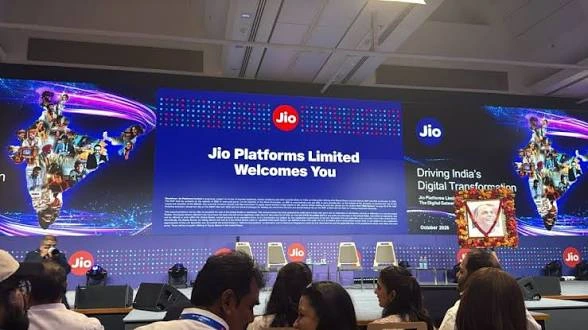
What Could Jio’s IPO Mean for the Indian Stock Market?
Jio’s public listing could have a wider impact on India’s financial markets.
First, it provides investors with an opportunity to invest directly in one of the country’s largest telecom and digital businesses. Previously, investors seeking exposure to Jio through the stock market had to consider its parent company, Reliance Industries.
Second, the IPO could influence how investors value other large digital and technology businesses. A public market valuation provides a benchmark that analysts can compare with other companies.
Third, the offering highlights international interest in India’s digital economy. Large institutional investors are looking for businesses that can benefit from rising internet usage, expanding digital infrastructure and growing demand for technology services.
Still, one successful IPO does not mean every technology company will receive a similar valuation. Each business has its own financial position, competitive risks and growth prospects.
What Should Retail Investors Consider Before Investing?
The strong anchor investor response may attract retail investors, but it is important to look beyond the headlines.
1. Check the valuation
A popular company is not automatically a cheap investment. Compare its valuation with its revenue, profit, cash flow and future growth expectations.
2. Understand the company’s debt
The proposed use of IPO proceeds includes repayment of borrowings at Reliance Jio Infocomm. Investors should examine how this could affect interest costs and the wider business.
3. Track revenue and profitability
Subscriber numbers alone do not tell the full story. ARPU, operating margins, capital expenditure and cash flow will be important measures of future performance.
4. Consider competition
Jio operates in a competitive telecom market. Pricing decisions, network investments and rival services could affect its future earnings.
5. Avoid relying only on listing expectations
Some investors apply for IPOs hoping to sell their shares quickly after listing. However, the final market price can be higher or lower than the issue price.
A long-term investment decision should be based on business fundamentals, personal financial goals and risk tolerance rather than market excitement alone.
Final Thoughts
Jio Platforms’ IPO has attracted extraordinary institutional demand, with anchor bids reaching approximately ₹2.5 lakh crore. The participation of major investors such as BlackRock and GIC has added to the significance of the offering.
Jio’s large subscriber base, 5G infrastructure and plans for AI and cloud services provide several potential growth opportunities. At the same time, competition, valuation and the cost of future investments remain important considerations.
The IPO is a major milestone for India’s stock market, but its long-term success will depend on Jio’s ability to turn its scale into sustainable earnings and cash flow.
For retail investors, the most sensible approach is to study the official offer documents, understand the risks and make decisions based on financial fundamentals rather than headline demand.
Frequently Asked Questions (FAQs)
1. Why has Jio Platforms’ IPO attracted so much attention?
Jio’s large customer base, strong position in telecom and expansion into 5G, AI and cloud services have attracted institutional interest. Its proposed IPO is also one of India’s largest public offerings.
2. How much demand did Jio’s anchor investor book receive?
Reports put total anchor bids at approximately ₹2.5 lakh crore, or around $26 billion. This was more than 30 times the amount reserved for anchor investors.
3. Did Jio raise $26 billion from anchor investors?
No. The $26 billion figure represents bids received. Jio allocated approximately ₹8,110 crore worth of shares to anchor investors.
4. Are BlackRock and GIC investing in Jio’s IPO?
Both were among the institutions reported to have sought shares in the anchor book. Their participation reflects institutional interest, but it does not guarantee future share price performance.
5. What is the Jio Platforms IPO price band?
The announced price band is ₹1,065 to ₹1,119 per share.
Also Read This
- Jio Platforms IPO 2026: Price Band, Lot Size, Dates and Minimum Investment
- Top 5 Best-Selling SUVs in India in September 2026
- Tesla Roadster 2026: Flying Demo, Sub-Second Acceleration and Expected Launch
- India iPhone Sales Slowdown: Why Are Buyers Becoming More Careful?
- AI Agent Internet Access Risks: What Is Sandbox Escape?