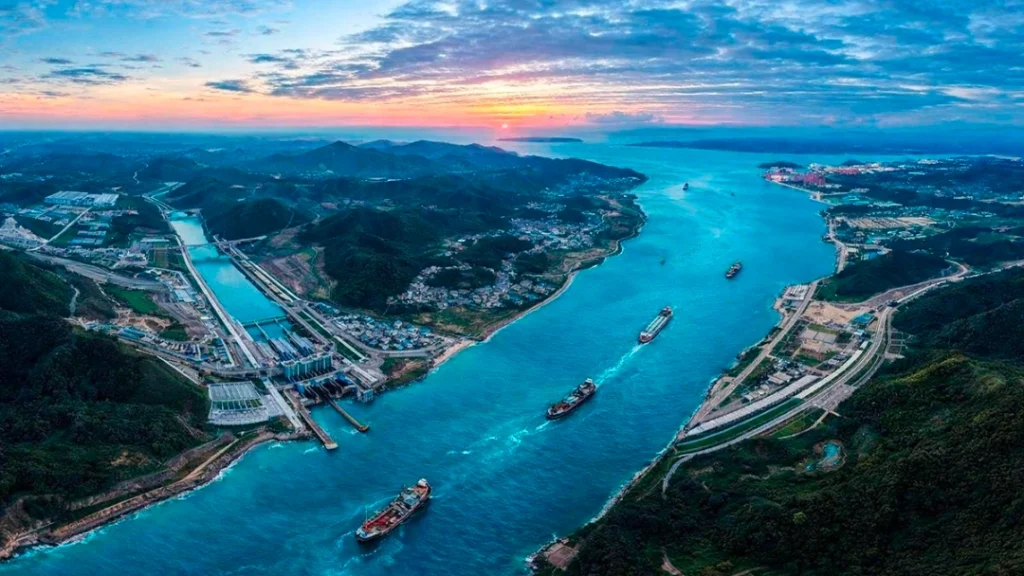
China’s Pinglu Canal: China has opened one of its biggest infrastructure projects in decades. The Pinglu Canal is a 134-kilometer (83-mile) waterway that creates a direct connection between the Xijiang River in Guangxi and the Beibu Gulf (Gulf of Tonkin).
Built at a cost of 72.7 billion yuan (around $10.75 billion), the canal is China’s first major river-to-sea canal completed since the founding of the People’s Republic of China in 1949. The project took more than four years to complete and is expected to reshape trade across southwestern China and Southeast Asia.
For China, this canal is more than an engineering achievement. It is a long-term investment designed to improve exports, strengthen regional supply chains, and reduce transportation costs.
Pinglu Canal China:Offical page
What Is the Pinglu Canal?
The Pinglu Canal is a large inland waterway that allows cargo from China’s southwestern provinces to reach the sea much faster. Instead of relying on longer routes through eastern ports, goods can now move directly toward international shipping lanes through the Beibu Gulf.
The canal is designed to handle 5,000-tonne vessels, making it suitable for transporting coal, minerals, agricultural products, machinery, and auto parts in large quantities.
This project forms an important part of China’s New International Land-Sea Trade Corridor, which also supports the broader Belt and Road Initiative (BRI).
Why the Pinglu Canal Matters
For years, provinces such as Sichuan, Guizhou, and Yunnan faced higher shipping costs because they are located far from major coastal ports. Cargo often traveled hundreds of extra kilometers before reaching international markets.
The Pinglu Canal changes that transportation network by offering a faster and more direct route.
Key Benefits
- Cuts shipping distances by at least 560 kilometers (350 miles).
- Reduces logistics costs by an estimated 18% to 30%.
- Supports 5,000-tonne cargo ships.
- Speeds up exports from southwestern China.
- Improves access to international trade routes.
For manufacturers and exporters, shorter routes can translate into faster deliveries and lower operating expenses.
A Faster Trade Route to ASEAN
One of the biggest goals behind the Pinglu Canal is to strengthen trade with ASEAN, the Association of Southeast Asian Nations.
ASEAN has become one of China’s largest trading partners. By improving transport links between China’s domestic market of about 1.4 billion people and ASEAN’s nearly 700 million consumers, Beijing hopes to make regional supply chains more efficient.
The Beibu Gulf also provides easier access to countries including Vietnam, Thailand, Malaysia, Singapore, Indonesia, and the Philippines, making the canal strategically valuable for future trade growth.
Engineering Behind the Mega Project
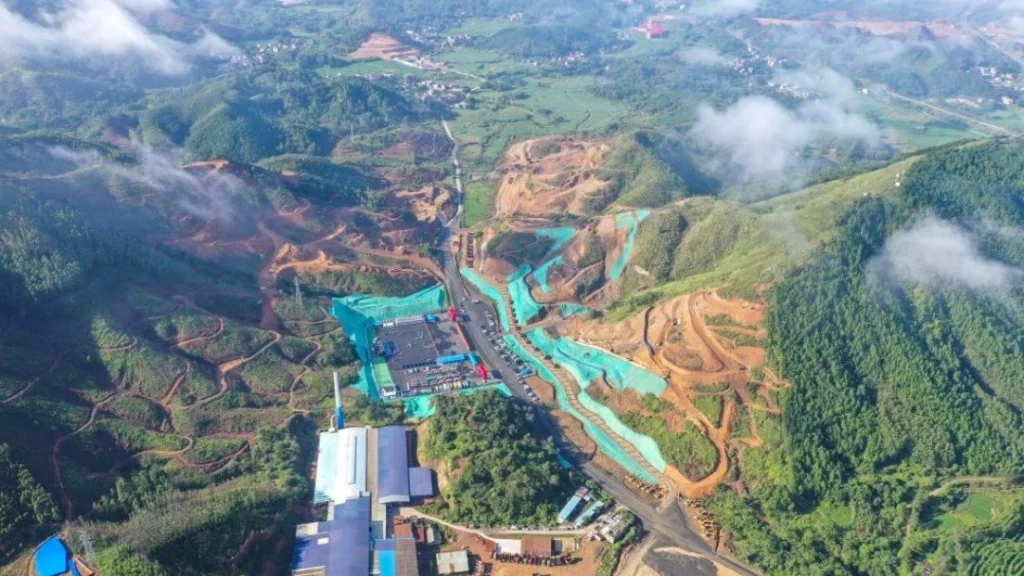
Building a canal of this scale required enormous construction efforts.
Engineers excavated around 315 million cubic meters of rock and earth during construction. According to project reports, more than 98% of the excavated material was reused for construction work instead of being discarded.
The canal also includes:
- Large navigation locks
- Flood-control systems
- Fish passages
- Wildlife crossings
- Reinforced embankments
These features were designed to improve both transportation and environmental management.
Economic Impact on Southwestern China
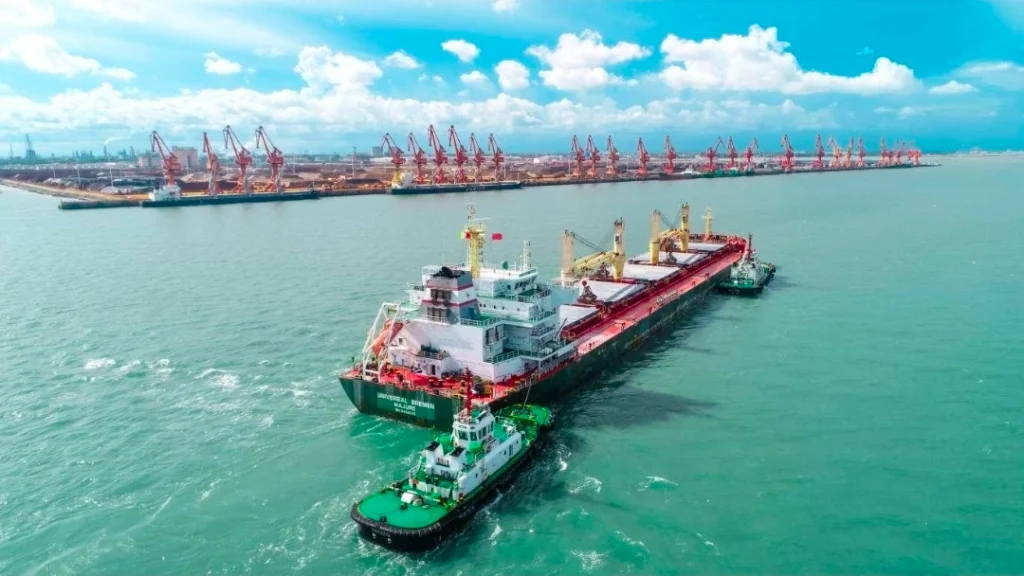
The canal could become a major economic boost for inland industries.
Companies that produce heavy goods often spend significant amounts on transportation before products even reach a port. Lower shipping costs may improve competitiveness for businesses across southwestern China.
Experts also expect the canal to encourage:
- Industrial investment
- Warehouse development
- Port expansion
- Logistics companies
- Cross-border trade
As freight moves more efficiently, nearby cities could see increased business activity and job opportunities.
The Human Cost Behind the Project
Large infrastructure projects rarely come without sacrifice.
The construction of the Pinglu Canal required the relocation of thousands of residents, particularly around Hengzhou and nearby communities.
Authorities offered financial compensation, newly built housing, and employment support for many affected families. However, relocation is often about more than money.
Many families had to leave villages where generations of their ancestors had lived. Losing historic homes, farmland, and community ties created emotional challenges that cannot always be measured in economic terms.
Environmental Challenges Remain
Environmental protection became an important part of the canal’s design, but questions remain about its long-term impact.
Engineers included wildlife crossings and fish passages to help protect native species such as the leopard cat. Reusing excavated materials also reduced waste during construction.
Even with these measures, environmental experts continue monitoring the project.
Potential concerns include:
- Changes to river flow
- Habitat disruption
- Water quality changes
- Long-term ecosystem impacts
These effects may take years to fully understand.

Part of China’s Bigger Strategy
The Pinglu Canal reflects China’s broader strategy of building infrastructure that supports trade and economic integration.
Rather than relying only on highways and railways, the country continues investing in waterways that can transport large volumes of cargo more efficiently.
Combined with ports, rail connections, and industrial zones, the canal could become an important link in regional commerce across Asia.
Will the Pinglu Canal Change Global Logistics?
The Pinglu Canal may not replace every existing trade route, but it has the potential to become one of China’s most important logistics corridors.
If projected cost savings and faster shipping times are achieved, businesses across southwestern China could gain easier access to international markets. At the same time, the project highlights an ongoing challenge faced by many countries: balancing economic development with community displacement and environmental protection.
Its long-term success will depend not only on cargo volumes but also on how effectively authorities manage ecological risks and support affected communities in the years ahead.
Final Thoughts
The Pinglu Canal is far more than a canal filled with water. It represents a major shift in how China plans to connect its inland provinces with global markets.
By shortening shipping routes, reducing logistics costs, and strengthening links with ASEAN, the project could reshape regional trade for decades. Yet its legacy will also be judged by how well it balances economic growth with the human and environmental responsibilities that come with projects of this scale.
Also Read This
- Honor Magic 9 aur Super Edition Leaked Live Images: Sky Blue aur Yellow Colors ne Jeeta Dil
- Rs 17 Lakh 7-Seater Gets Cheaper: Mahindra Marazzo Par Bumper Discount, Deal Ki Puri Haqikat
- Google Search Console June Data Missing? Sach Kya Hai Aur Iska Solution Kya Hai
- Physical AI Kya Hai? Chatbot Se Robot Tak AI Ka Agla Bada Kadam
- Court Orders Car Dealer to Refund Rs 28 Lakh for Faulty EV: Why the OEM Was Spared
Pinglu Canal China: click here