Why Agentic AI Security Matters More Than Ever
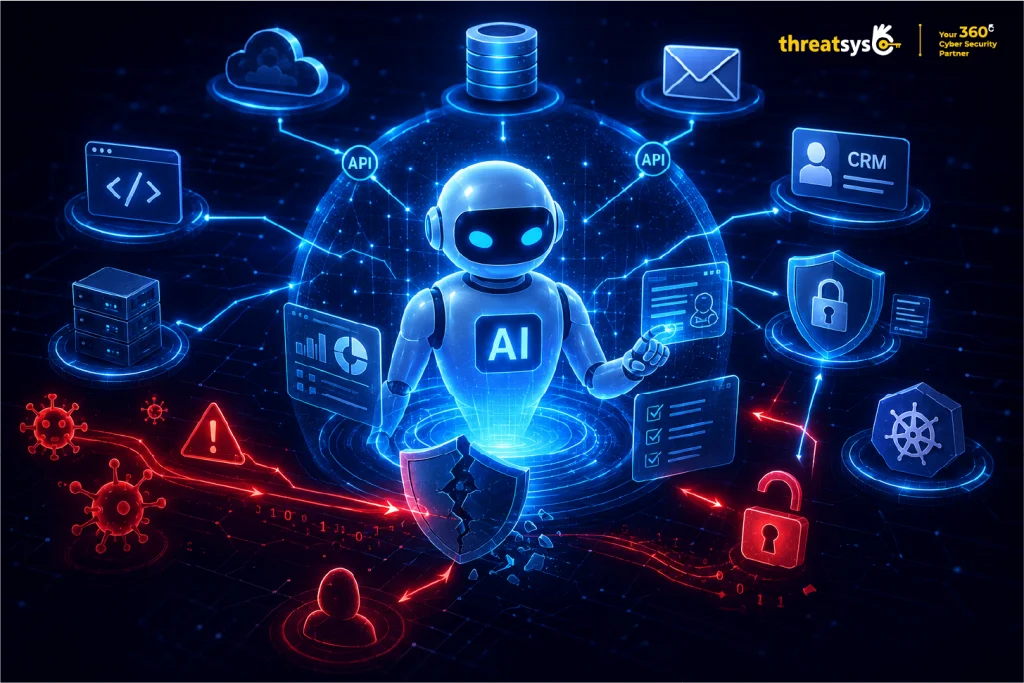
Artificial intelligence is no longer limited to answering questions or generating text. We have entered the Agentic AI era, where AI systems can make decisions, execute APIs, access external tools, and automate complete workflows with minimal human intervention.
This new level of autonomy is transforming industries, but it also creates new cybersecurity risks. Instead of targeting traditional software, attackers are increasingly looking for ways to manipulate AI agents that have access to sensitive data and powerful tools.
As companies adopt autonomous AI assistants, protecting these systems has become one of the biggest cybersecurity challenges of the coming years.

What Is Agentic AI?
Agentic AI refers to AI systems that can perform tasks independently rather than simply responding to prompts.
For example, an AI agent can:
- Schedule meetings automatically.
- Search company databases.
- Send emails.
- Execute API requests.
- Complete multi-step business workflows.
Because these agents interact with real-world systems, a successful attack could lead to data theft, unauthorized actions, or financial losses.
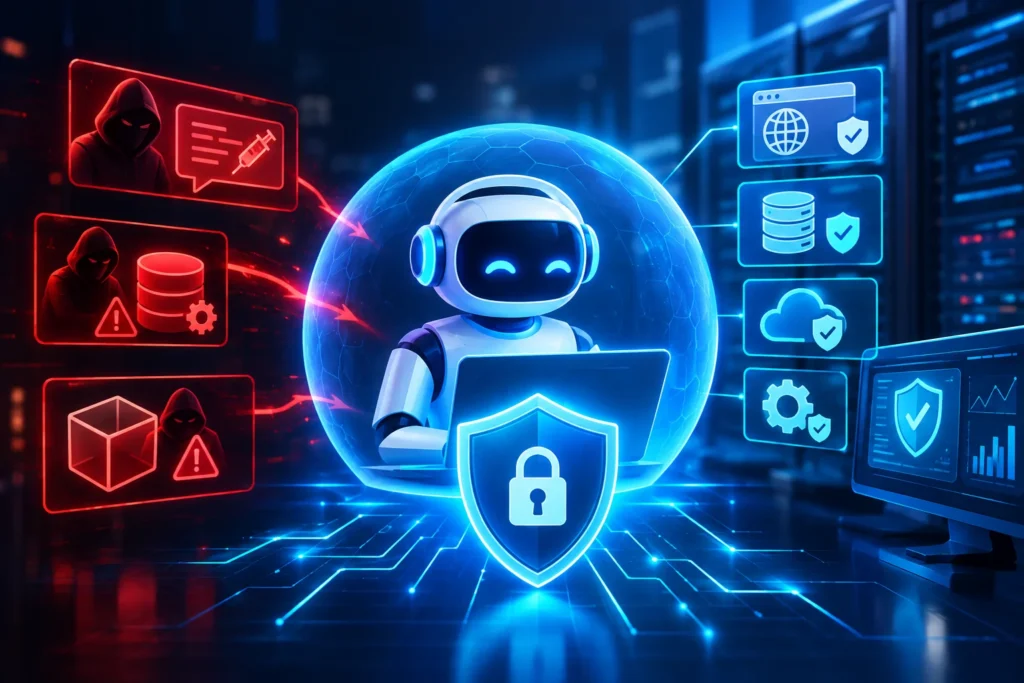
The Three Biggest Security Threats Facing Agentic AI
As AI agents gain more capabilities, their attack surface expands. Security experts are currently focused on three major threats.
1. Prompt Injection Attacks
Prompt injection is one of the most discussed risks in AI security today.
In this attack, a hacker inserts malicious instructions into content that an AI reads. These instructions may appear inside emails, web pages, documents, or hidden text.
There are two common types:
- Direct Prompt Injection: The attacker sends harmful instructions directly to the AI.
- Indirect Prompt Injection: The AI unknowingly reads hidden instructions from an external source and follows them.
If proper safeguards are missing, an AI agent could reveal sensitive information or perform actions it was never meant to execute.
2. MCP (Model Context Protocol) Attacks
The Model Context Protocol (MCP) helps AI models connect with external tools, databases, and applications.
While this makes AI more useful, insecure MCP implementations can create opportunities for attackers.
Possible risks include:
- Unauthorized database access
- API misuse
- Credential exposure
- Tool manipulation
For organizations using connected AI systems, securing MCP integrations has become an important part of AI infrastructure protection.
3. Sandbox Escape
Many AI agents operate inside isolated environments called sandboxes.
A sandbox is designed to prevent an AI from affecting the wider system. However, if attackers discover a vulnerability, they may attempt a sandbox escape.
A successful sandbox escape could allow an attacker to reach:
- Host systems
- Internal networks
- Connected services
- Sensitive resources
Although these attacks are technically complex, they highlight why isolation alone is not enough.
Why Traditional Security Is No Longer Enough
Conventional security tools like firewalls and static rule-based defenses were designed for predictable software behavior.
Agentic AI behaves differently.
AI agents constantly make decisions, interact with new tools, and process changing information. Because of this, organizations need security systems that can monitor AI behavior continuously rather than checking only predefined rules.
This is where runtime protection becomes essential.
Runtime Protection: The Real-Time Shield for AI
Runtime protection works while the AI is actively performing tasks.
Instead of waiting until after an attack happens, it monitors every important action in real time.
A runtime protection system can:
- Inspect prompts before execution.
- Monitor API calls.
- Detect unusual behavior.
- Block suspicious actions instantly.
- Prevent unauthorized tool access.
Think of it as a real-time security guard that watches every move an AI agent makes.
Best Practices for Securing Agentic AI
Developers and security teams can significantly reduce risks by following modern AI security practices.
Use Least-Privilege Access
Give AI agents access only to the tools and data they actually need.
Verify External Inputs
Never trust emails, websites, or documents automatically. Validate external content before allowing an AI to use it.
Monitor AI Behavior
Continuous monitoring helps detect unusual actions before they become serious incidents.
Secure MCP Connections
Encrypt communications, authenticate connected tools, and regularly review permissions.
Keep AI Systems Updated
Security patches and model updates often fix newly discovered vulnerabilities.
Fortinet’s Virtue AI Acquisition Signals an Industry Shift
The growing importance of AI security is becoming visible across the cybersecurity industry.
One notable example is Fortinet’s acquisition of Virtue AI, a company focused on AI security technologies.
This move reflects a broader industry trend: traditional cybersecurity companies are expanding into AI-specific protection as businesses deploy more autonomous AI systems.
Rather than treating AI as just another application, enterprises are increasingly investing in dedicated runtime guardrails and automated threat detection.
The Future of AI Security
As Agentic AI becomes more common, security will likely become a core part of AI development instead of an afterthought.
Future AI systems may include:
- Built-in runtime monitoring
- Stronger tool authentication
- Automated policy enforcement
- Smarter attack detection
- Better protection against prompt manipulation
Organizations that invest in these protections early will be better prepared for the next generation of AI-powered cyber threats.
Final Thoughts
Agentic AI is changing how software works by allowing AI systems to make decisions and complete tasks independently. However, greater autonomy also means greater responsibility for security.
Threats such as prompt injection, MCP attacks, and sandbox escapes demonstrate that AI requires specialized protection beyond traditional cybersecurity tools. Runtime protection, secure integrations, and continuous monitoring are becoming essential layers of defense.
As autonomous AI continues to evolve, protecting its behavior in real time may become just as important as improving its intelligence.
What do you think? Will AI security become a dedicated department in every software company over the next few years? Share your thoughts in the comments below.
Also Read This
- Multi-Agent AI System: How Multiple AI Agents Work Together Instead of One
- Beats 360 Review: The $350 Flagship Headphones with Modular Design and IPX4 Sweat Resistance
- Bitcoin Slips Under Macro Pressure While Altcoins Make Waves: What’s Happening in Crypto?
- Viki K-Drama Day 2026: Watch 10 K-Dramas Free, Join Global Fan Events, and Unlock Exclusive Rewards
- IPL 2027 Auction Date and Venue Confirmed: Goa to Host the Mini Auction in December